You solved Founder-led sales. What about Founder-led Customer Success?
GTM & Strategy, Leadership
Who is it for?
CEOs, founders, executive teams who can see a problem in retention and growth.
When to use?
When your company is scaling, your customers are wobbling, and you are relying on the founder too often to rescue the situation.
2026-08-10
Founder led Customer Success is the parallel of Founder led Sales, but doesn't get anything like the same level of recognition. If you are growing significantly, this will quickly become an issue, and you need to migrate Success to a repeatable process in the same way you would have done with Sales.
Everyone accepts the sales problem now. The Founder sells through context, credibility and force of will, it works, and at some point it has to become something other people can run. That conversation happens constantly.
The identical conversation about post-sales happens far less often, but the pattern is very similar.
Heroic customer care
In the early days, customers stay successful because senior people are close to them. The Founder knows why they bought. Product understands the awkward edge cases (and Product is often the Founder at this point). Sales remembers the promise that was made and who matters inside the account.
When something wobbles, the right person jumps in.
I call this heroic customer care. It usually means the company cares deeply about its customers, and for a while it works well. Customers feel looked after. Problems get solved. Info is shared quickly because everyone still knows what is going on.
Then ten customers become eighty. The number of use cases multiplies. The person who remembers what was actually promised is now three steps away from the account, or maybe they've moved on.
At some point memory and senior-person heroics are not enough for the stage you have reached.
The challenges you will see
Handover is inconsistent. The seller knows why the customer bought, but that context does not always survive into Customer Success.
Onboarding is variable. Some customers quickly get value. Others drift through implementation and there isn't a clear picture of what success looks like.
Renewal risk arrives late. By the time everyone agrees there is a problem, the customer has already mentally checked out.
Expansion is opportunistic. You spot the upsell when the customer asks for something, not because you have a deliberate view of where you can add value.
Product feedback is noisy. The loudest customers sound like the most important customers, even when they do not represent the segment you most want to serve.
Are these problems you are seeing? If so, you need to move on from Founder-led Customer Success.
How do you know if a customer is healthy?
A key gap under all the above is clarity on what customer health means.
1️⃣ Is the customer using the product?
2️⃣ Are the right stakeholders engaged?
3️⃣ Are they achieving the outcome they bought?
4️⃣ Would they buy again today?
For most companies, the first is easy to see through the product itself. The second is often reasonably visible, though frequently misjudged. Below that, most companies are increasingly blind.
Post-sales needs a clear motion
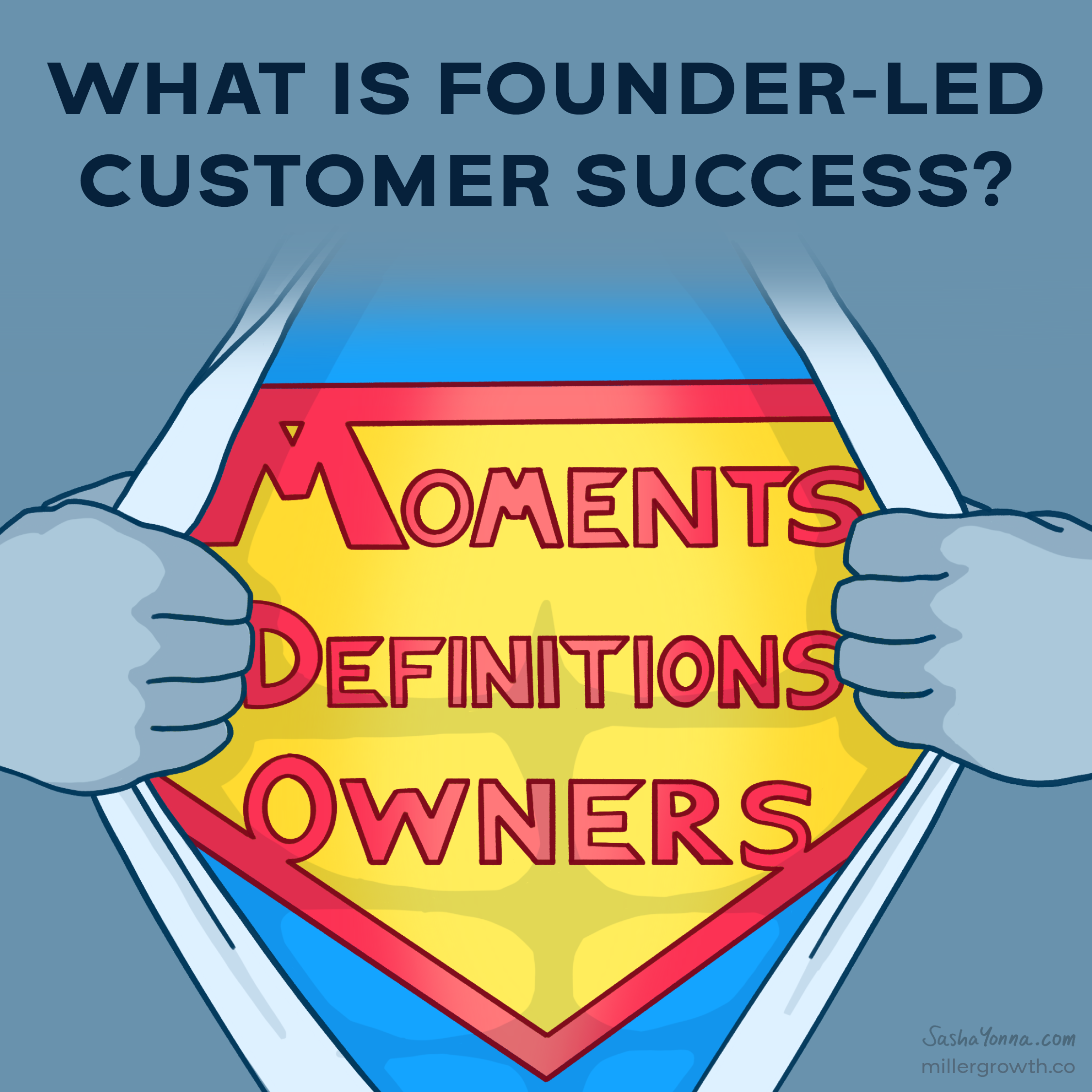
The fix is to build the post-sales motion as deliberately as you built the sales motion. In practice that is three sets of decisions.
Moments. What happens between signature and kickoff? What does a good Sales-to-CS handover contain? When does Sales come back in? When does Product get involved? When should senior leadership engage?
Definitions. What outcome did this customer actually buy, and who inside their business cares about it? What does time-to-value mean here? What are the early signs an account is drifting?
Owners. Who owns adoption? Who owns renewal risk? Who owns expansion?
If you have clear processes for these, the things your best people do instinctively should be repeatable by everybody else.
Founder-led Customer Success is usually a sign the company stayed close enough to its customers to learn what actually matters. But like Founder-led sales, it has to evolve.
Have a look at your own business: take your last five renewals and ask when you genuinely first knew there was a risk. If the honest answer is the month before, you have a clear signal you need to tighten up the processes.
As anybody in SaaS is pretty clear today, the deal is not won when the contract is signed. It is won when the customer reaches value, renews, expands and would happily buy again.
I'm happy to discuss further. Just let me know.
If this was useful, stay close to the thinking.
Get practical GTM insights and strategic breakdowns in your inbox. Weekly.
Related Posts
GTM & Strategy, Leadership
Leadership
2026-07-06
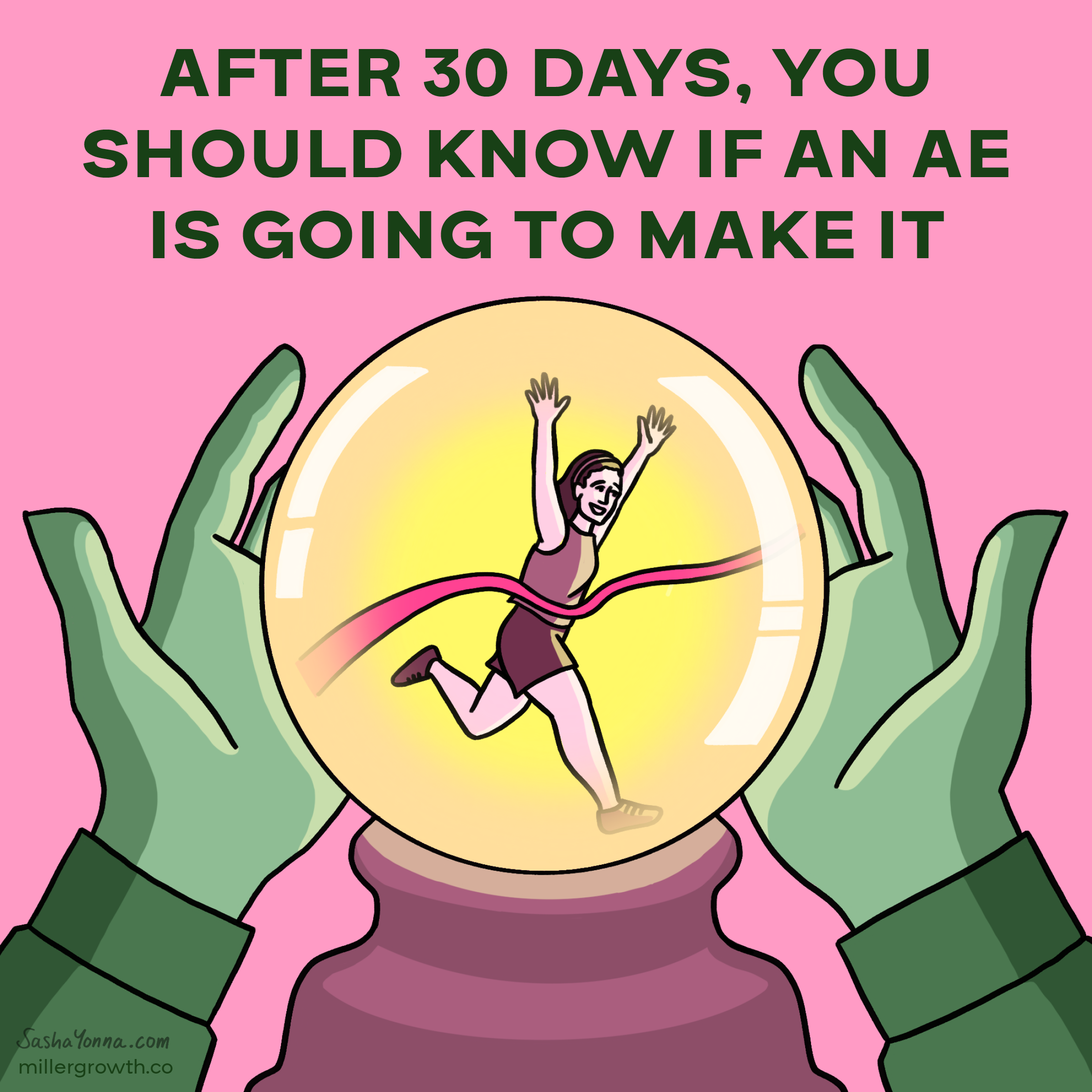
After 30 days, you should know if an AE is going to make it
Most sales managers treat the first 30 days as a test of the new AE. It is equally a test of the company. By day 30 you cannot know if they will hit quota, but you can know whether they are learning, building pipeline, and responding to coaching - and whether your onboarding gave them a fair chance.
Relevant resources
Tools and insights for improving your revenue engine
Demo Training
Coach winning demos

Discovery Training
Qualify deeper, faster
AE Toolkit
Hire top performers
See more resources →