How do you know if your team is coachable?
Leadership
Who is it for?
Sales managers and CROs responsible for hiring and developing quota-carrying teams.
When to use?
When the same feedback keeps landing with the same person and nothing changes.
13 Jul 2026
Most managers say they value coachability but have never actually defined it. Without a clear standard, you cannot hire for it, test for it, or hold anyone to it - including yourself.
Coachability is the biggest predictor of success in almost any role. Whatever someone can do today, the coachable version of them will do more tomorrow, and better the day after. Compounding does the rest.
And everybody says they want to learn. Everybody says they are coachable.
Unfortunately, most managers have never defined what they actually mean by it. Which means you can't hire for it, you can't test for it, and your team can't develop towards it. They're being judged against a standard that's not explicit.
Define it first
So, be explicit about what coachability means.
Actively seeking feedback - from any source, not just your manager - on what's working and what isn't.
Thoughtfully considering how feedback applies, not looking for ways in which it doesn't apply.
Acting on the feedback in future.
And what it doesn't mean: debating the feedback at length. Coachability is not the same as agreeing with everything. But the test is whether you take it in and apply it, not whether you can construct a defence against it.
This goes both ways. You as a manager get held to the same standard. You solicit feedback, you consider how it applies, and you visibly act on it. You can't expect your team to be great at developing with feedback if you don't lead from the front.
Test for it in interviews
Once you've defined it, you can test for it.
When interviewing an AE, ask them about a deal they lost. Listen to the lessons they say they learned. Then ask challenging questions about what they might have missed - real questions, with a real point of view behind them.
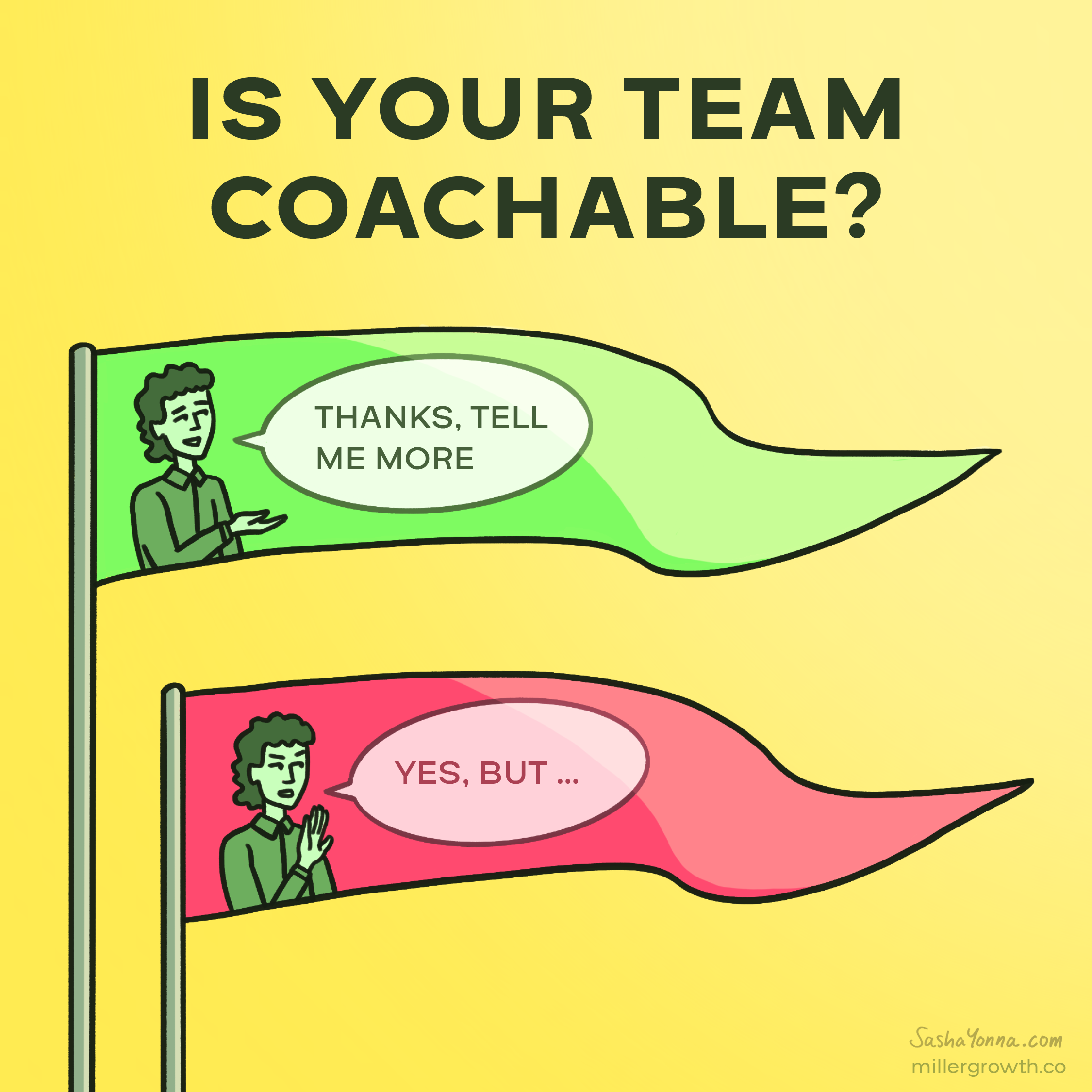
The coachable candidate engages. They sit with what you're suggesting and think about how it applies. They might ask questions, but that is in order to understand, not reject. They often thank you for the feedback at the end of the interview.
The uncoachable candidate agrees in principle and then explains, in detail, why your specific feedback doesn't apply to their specific case.
That's the red flag: the "yes but" response. In my experience it's one of the strongest negative signals you'll get in an interview, don’t ignore it.
Test for it on your existing team
Once you have defined what you mean by coachability, you now give people clear, specific, actionable feedback.
If you're giving the same feedback to the same person repeatedly, there is a coachability issue. If they always explain why your feedback doesn't apply to their particular situation, there is a coachability issue.
Quality of feedback
Key caveat: There is good feedback and bad feedback. Focus on doing a great job giving feedback.
Make it specific and actionable. Yep, I said that before, sorry 😉
Deliver it as close as possible to the moment.
Don't overload. If something went well, name one or two things rather than seventeen. If something didn't, pick one or maximum two areas for development.
Positive feedback should be as specific as negative feedback. "Great job, you handled that meeting well" is lovely to hear and tells the AE nothing. "Great job - I love the way you deflected the objection by asking how it applied to the problem they were trying to solve" tells them exactly what to do again.
The feedback is about the action or the task, and not about the person. "You are defensive." will only encourage a defensive reaction. "I explained that we need to provide professional-looking documentation, and you told me that doesn't apply with your prospects." gives a better chance of a constructive conversation.
What to do when someone fails the standard
If someone consistently argues with feedback, or consistently fails to apply it, that itself is feedback they need to hear. Not as a complaint about attitude, but as a clear statement against the standard you've already defined. "Coachability means considering how feedback applies. You've spent the last three conversations explaining why it doesn't. That's the issue we need to address."
If the pattern continues after you've highlighted it, you have a different conversation on your hands. You've given them everything they need to improve. At that point coachability isn't the issue any more - the issue is that the person has decided not to develop in this role, or they’ve decided that your feedback is not valuable to their development.
Happy to discuss if useful.
If this was useful, stay close to the thinking.
Get practical GTM insights and strategic breakdowns in your inbox. Weekly.
Related Posts
GTM & Strategy, Leadership
2026-08-10
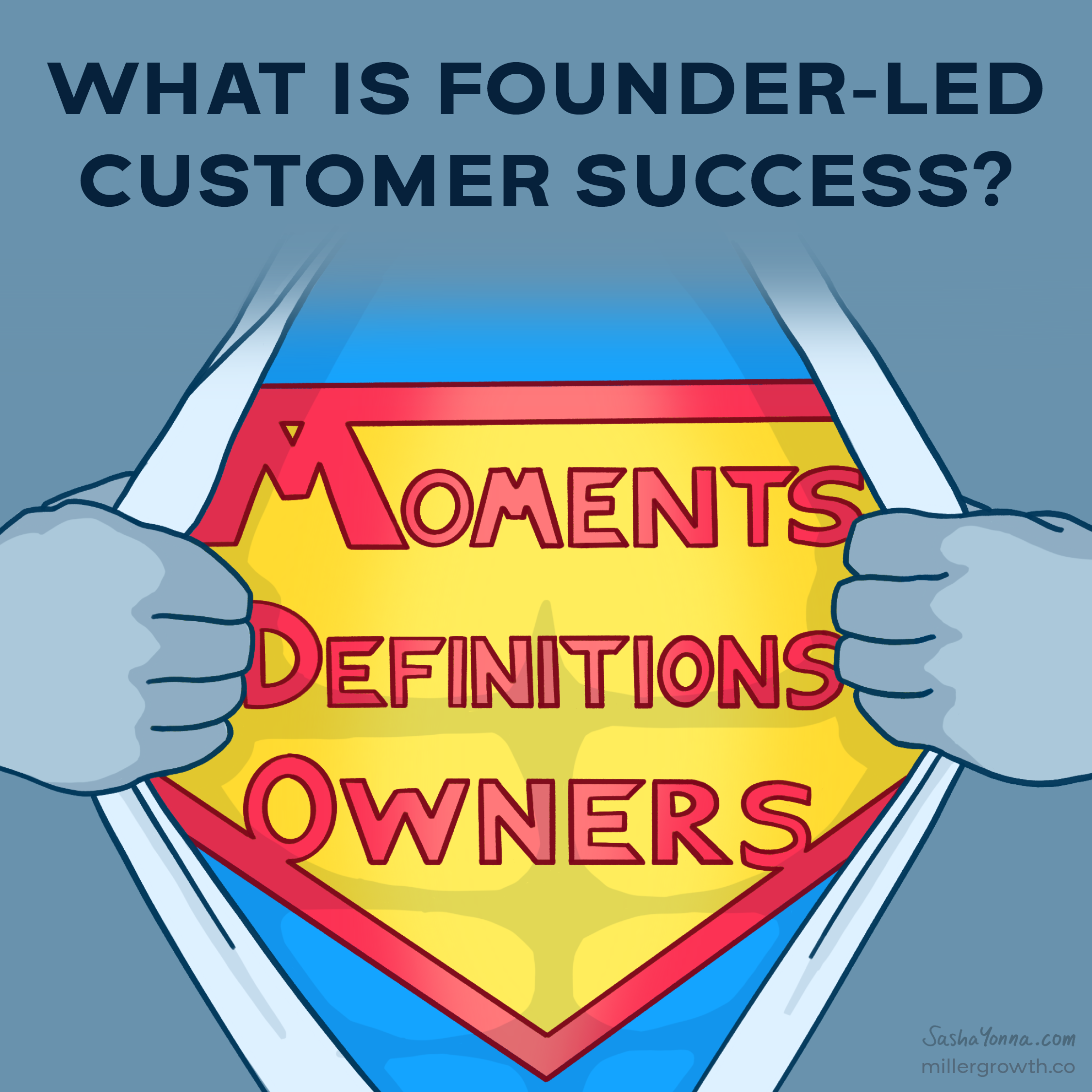
You solved Founder-led sales. What about Founder-led Customer Success?
Founder led Customer Success is the parallel of Founder led Sales, but doesn't get anything like the same level of recognition. If you are growing significantly, this will quickly become an issue, and you need to migrate Success to a repeatable process in the same way you would have done with Sales.
AI in GTM / RevOps, GTM & Strategy, Leadership
2026-08-03
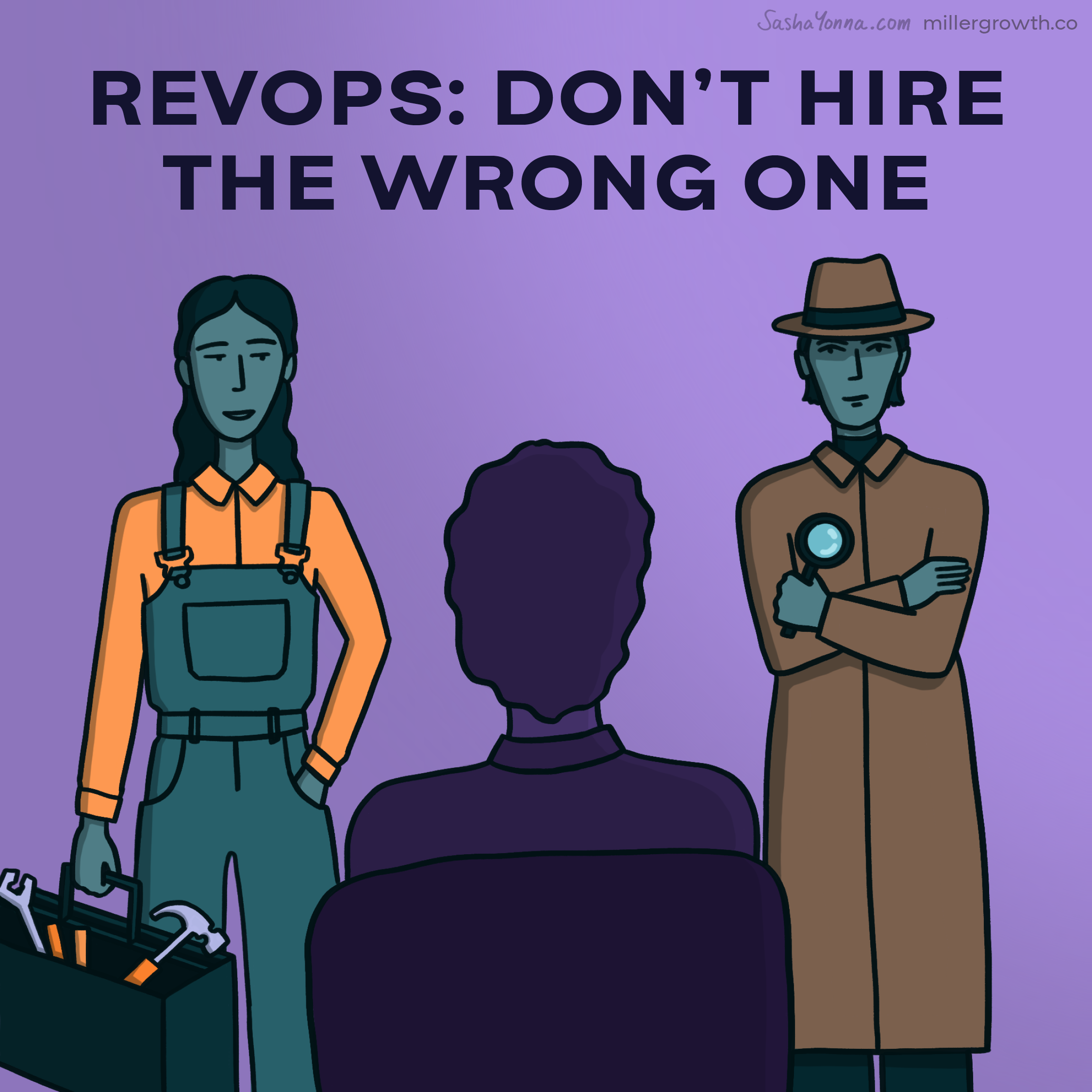
There are two RevOps hires. Most companies hire the wrong one.
Most companies hire RevOps expecting both operational rigour and commercial insight - and get neither. The two roles require different skills, and conflating them in a single job spec is one of the more expensive hiring mistakes a scaling revenue team can make.
Leadership
2026-07-27
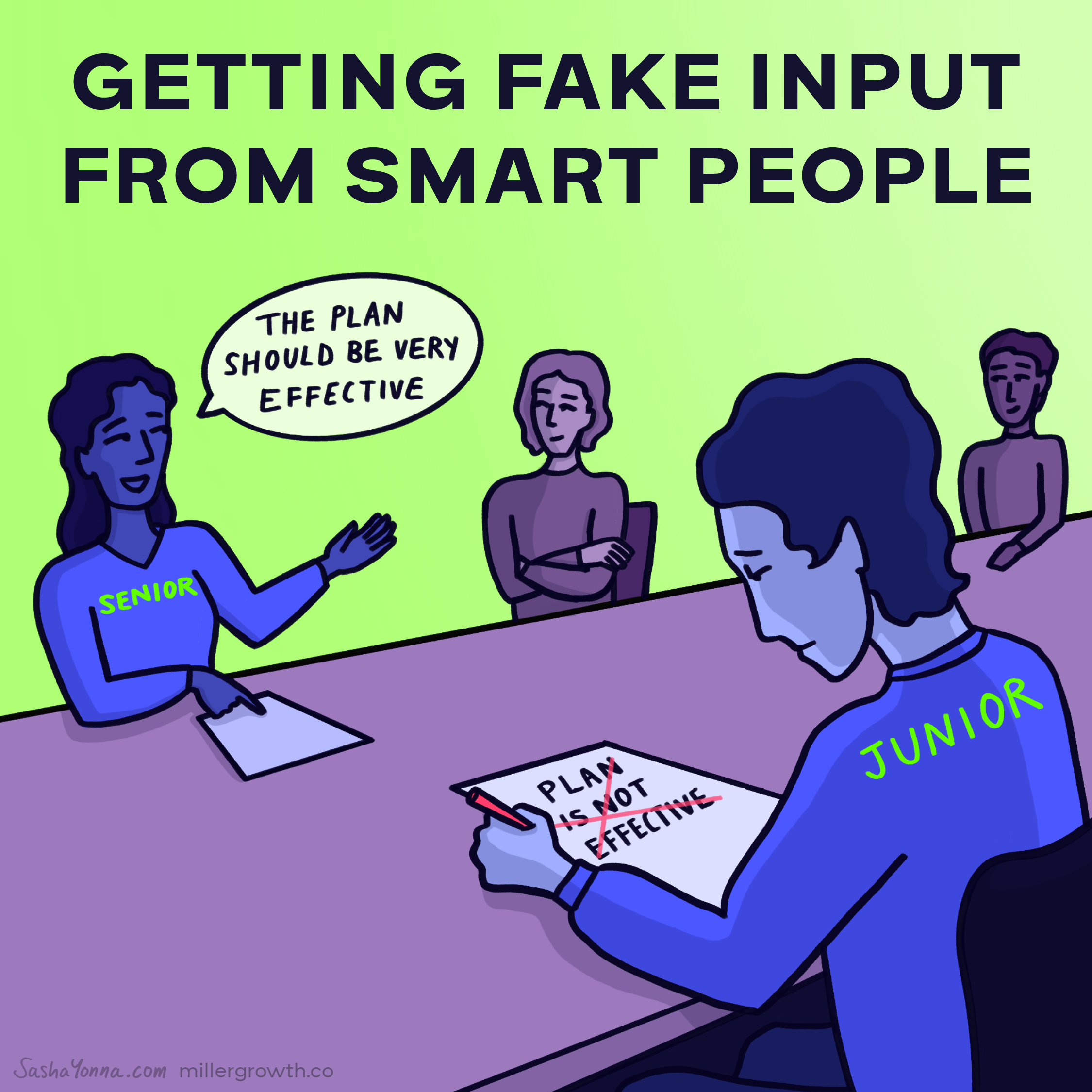
Getting fake input from smart people
Most leaders think they want honest input. What they actually get is anchored agreement, premature consensus, and silence from the people who had the most useful thing to say. The problem is rarely the team - it's how the question gets asked and how the room gets run.
Relevant resources
Tools and insights for improving your revenue engine
Demo Training
Coach winning demos

Discovery Training
Qualify deeper, faster
AE Toolkit
Hire top performers
See more resources →