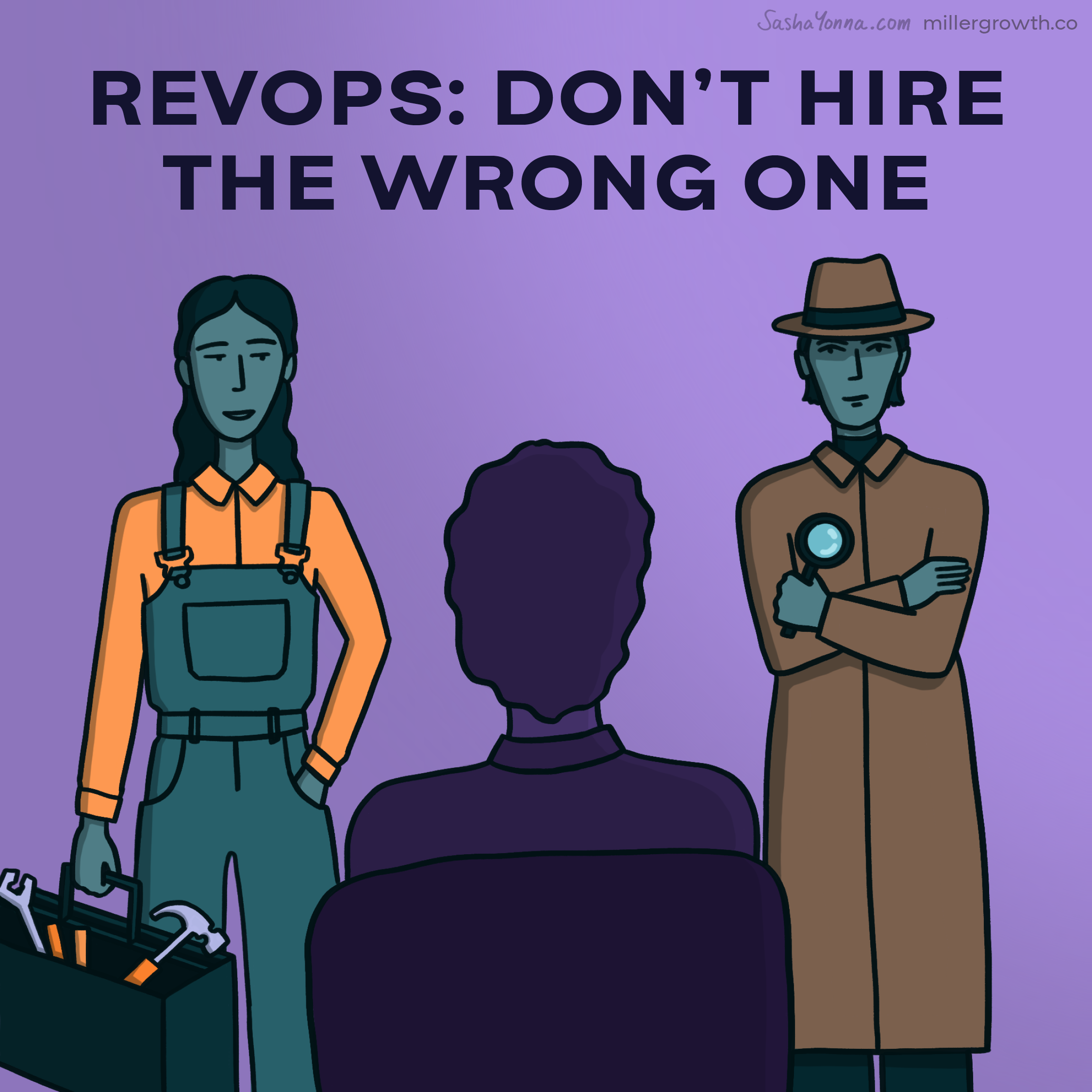
There are two RevOps hires. Most companies hire the wrong one.
AI in GTM / RevOps, GTM & Strategy, Leadership
Who is it for?
CEOs, CROs, and founders preparing to hire or restructure their RevOps function.
When to use?
When leadership meetings are spent arguing about the data rather than acting on it, or when a RevOps hire has not delivered the commercial insight you expected.
2026-08-03
Most companies hire RevOps expecting both operational rigour and commercial insight - and get neither. The two roles require different skills, and conflating them in a single job spec is one of the more expensive hiring mistakes a scaling revenue team can make.
Most companies hire RevOps for the visible work - dashboards, CRM hygiene, Board packs - and assume they will also provide commercial insight. But it doesn't happen, because those are two different people.
These practical things matter. A business with poor data, messy systems and no clear reporting is much harder to run. But that’s not the big value of RevOps.
The key value of RevOps is to help the commercial team see what’s really happening. Where pipeline actually comes from. Where deals really get stuck. Which segments expand, and which churn. Reporting tells you what happened. RevOps should identify where you need to act.
Those are two different hires.
1️⃣ Technologist
This is systems and data. They make the GTM tech stack work: the CRM, the integrations, the data quality, the reporting layer, GRR and NRR calculations. Minimising manual work for the team.
This is hugely valuable and every company needs it sorted.
For most companies this starts as a part-time internal techie long before it justifies a dedicated hire.
2️⃣ Commercial analyst
This is about providing commercial visibility. This person understands the motion, not just the system - outbound, inbound, demand generation, pipeline management, retention, expansion.
Their value is the insights they bring to a leadership meeting.
This channel produces meetings but no opportunities. I think it may be because…
We win in this segment and lose in the adjacent one. The difference could be…
Expansion is strong in one cohort and flat in another. We could test that by…
They will not always be right. Nobody is. But they will be looking in the right places, and they will start the discussions worth having.
Which do you need?
Look at your last three leadership meetings. Were the arguments about whether the numbers were right (perhaps you were not even looking at them), or about what to do about them?
If your team spent the meeting disputing the data, you need a technologist.
If your team has the numbers but is not acting on what they’re telling them, you need the analyst.
This is typically two job specs, not one
If you try to get two for one, you may hire an excellent technical RevOps person, and a few months later you are frustrated that they are not bringing commercial insight.
Or you hire a sharp commercial operator, and you are disappointed that they are not excited about stitching together APIs and cleaning the CRM.
In both cases, you expected something you weren’t hiring for.
So be clear on what you need and spec that role correctly. Be explicit about what you need - both among the hiring team and with the candidates.
If you are about to make this hire and are not sure which one you need, I am happy to talk it through, or share how I would structure the two specs - just let me know.
If this was useful, stay close to the thinking.
Get practical GTM insights and strategic breakdowns in your inbox. Weekly.
Related Posts
AI in GTM / RevOps
2026-09-07
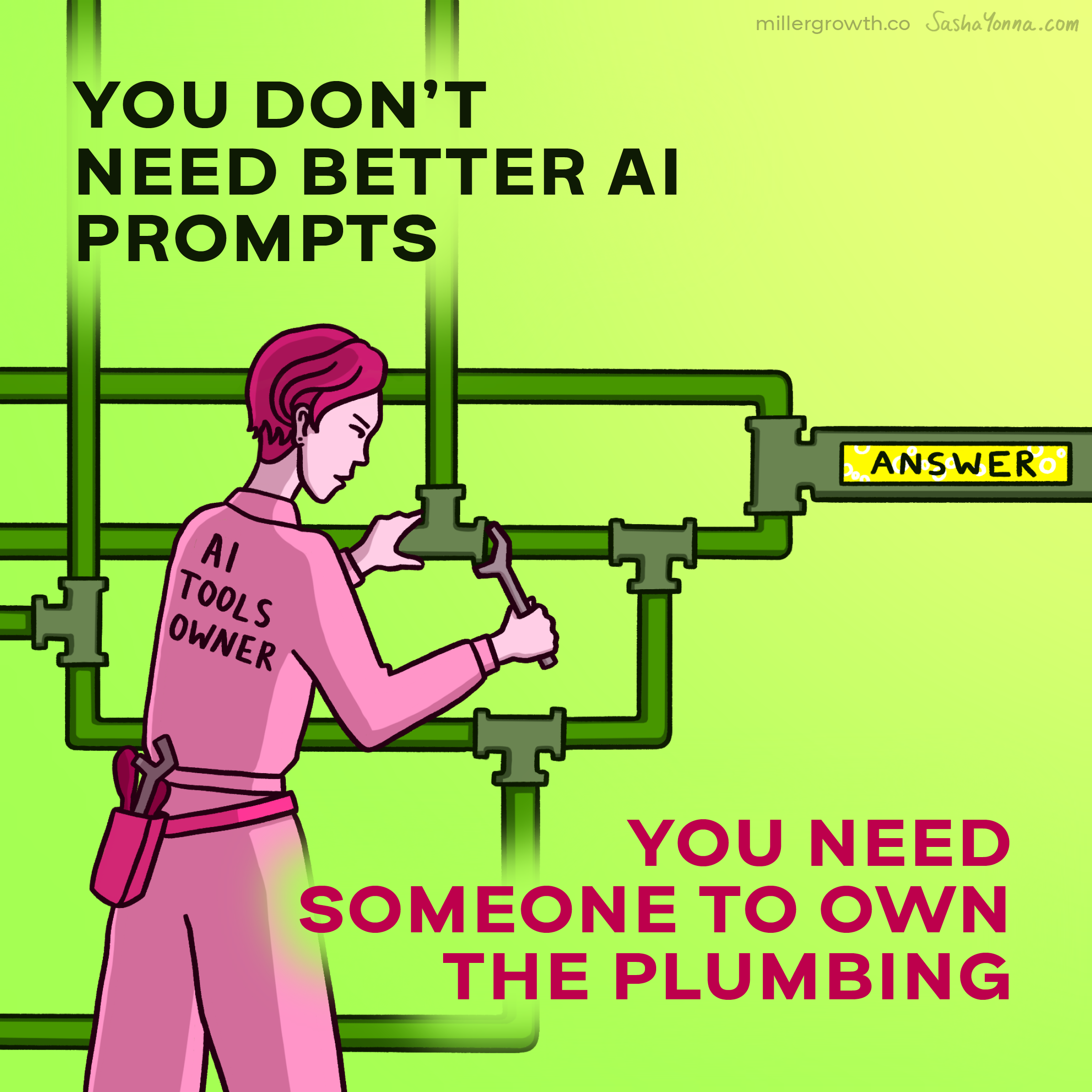
You don't need better AI prompts. You need someone to own the plumbing.
Most AI advice for sales teams is aimed at the individual seller: better prompts, smarter workflows, a clever system that closes more deals. It isn't wrong, but it's solving the wrong problem. The reason your team gets so little out of an expensive AI stack is that nobody owns the plumbing behind it.
GTM & Strategy, Leadership
2026-08-10
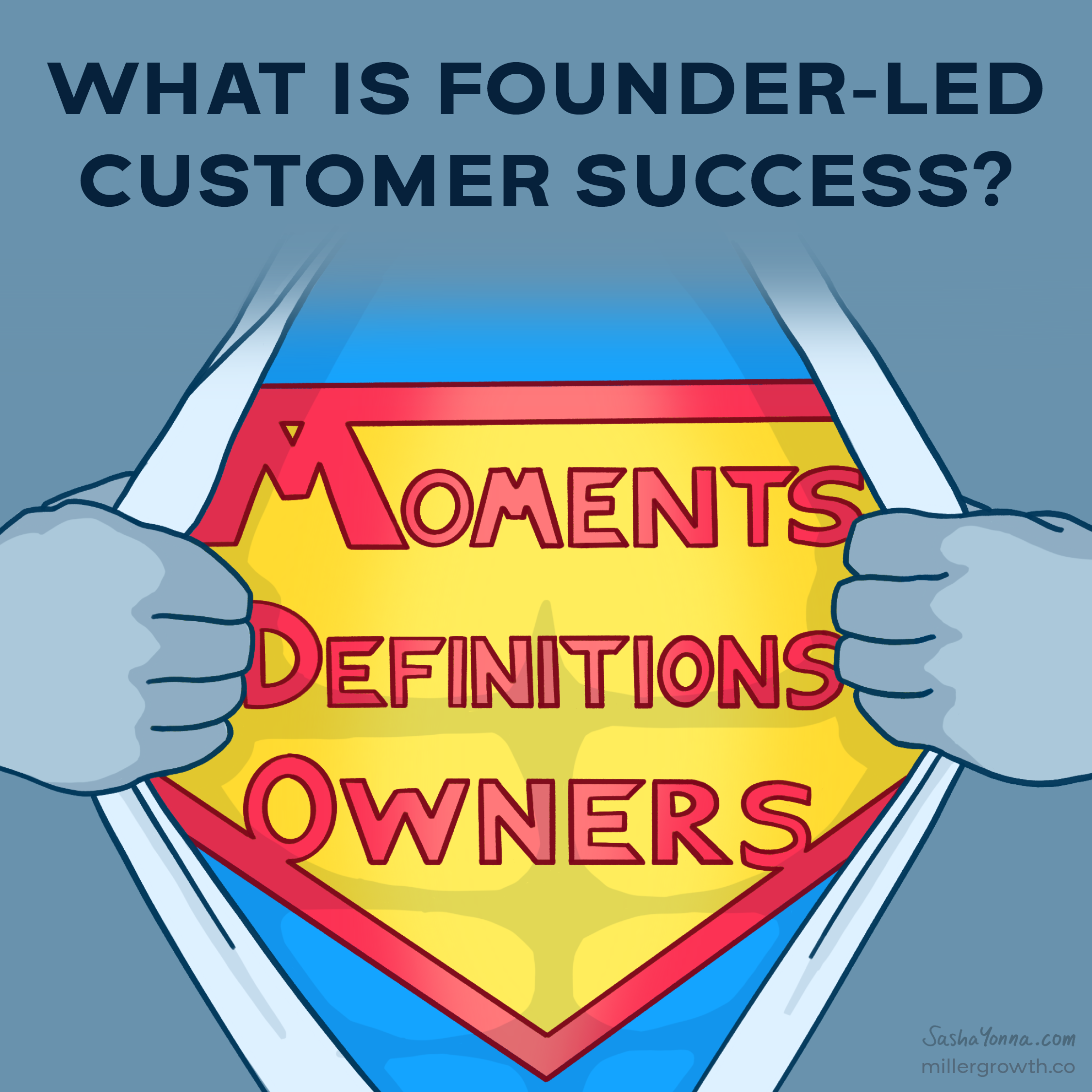
You solved Founder-led sales. What about Founder-led Customer Success?
Founder led Customer Success is the parallel of Founder led Sales, but doesn't get anything like the same level of recognition. If you are growing significantly, this will quickly become an issue, and you need to migrate Success to a repeatable process in the same way you would have done with Sales.
AI in GTM / RevOps, GTM & Strategy, Leadership
2026-08-03
There are two RevOps hires. Most companies hire the wrong one.
Most companies hire RevOps expecting both operational rigour and commercial insight - and get neither. The two roles require different skills, and conflating them in a single job spec is one of the more expensive hiring mistakes a scaling revenue team can make.
Relevant resources
Tools and insights for improving your revenue engine
Demo Training
Coach winning demos

Discovery Training
Qualify deeper, faster
AE Toolkit
Hire top performers
See more resources →