Getting fake input from smart people
Leadership
Who is it for?
Founders, CEOs, and senior leaders who run decisions through people.
When to use?
When a key decision keeps stalling or the same voices dominate every room.
2026-07-27
Most leaders think they want honest input. What they actually get is anchored agreement, premature consensus, and silence from the people who had the most useful thing to say. The problem is rarely the team - it's how the question gets asked and how the room gets run.
Nearly every founder, CEO, and leader I know says they want to get input from their teams, their peers, and their network on difficult decisions. And most of the time, they fail to get decent input despite their best intentions.
The failure is almost always self-inflicted. Four mistakes show up repeatedly.
1️⃣ Not asking the right question. "Do you think our mid-market sales motion could be more effective?" implies that you already know the answer and want agreement. And how can anybody say no to the question as stated? Much better: "What information do you need to help judge whether our mid-market sales motion is as effective as it should be, and what we can do to improve it?"
2️⃣ Not giving people a chance to think about it. You've been mulling over this question for days. You have several ideas you want to debate, so you call a meeting and explain at the start that the topic is the mid-market sales motion. The rest of your team hasn't even thought about it yet. If you really want good input, you need to give people the topic in advance, provide relevant info for them to consider, and allow time to reflect on it before they walk in.
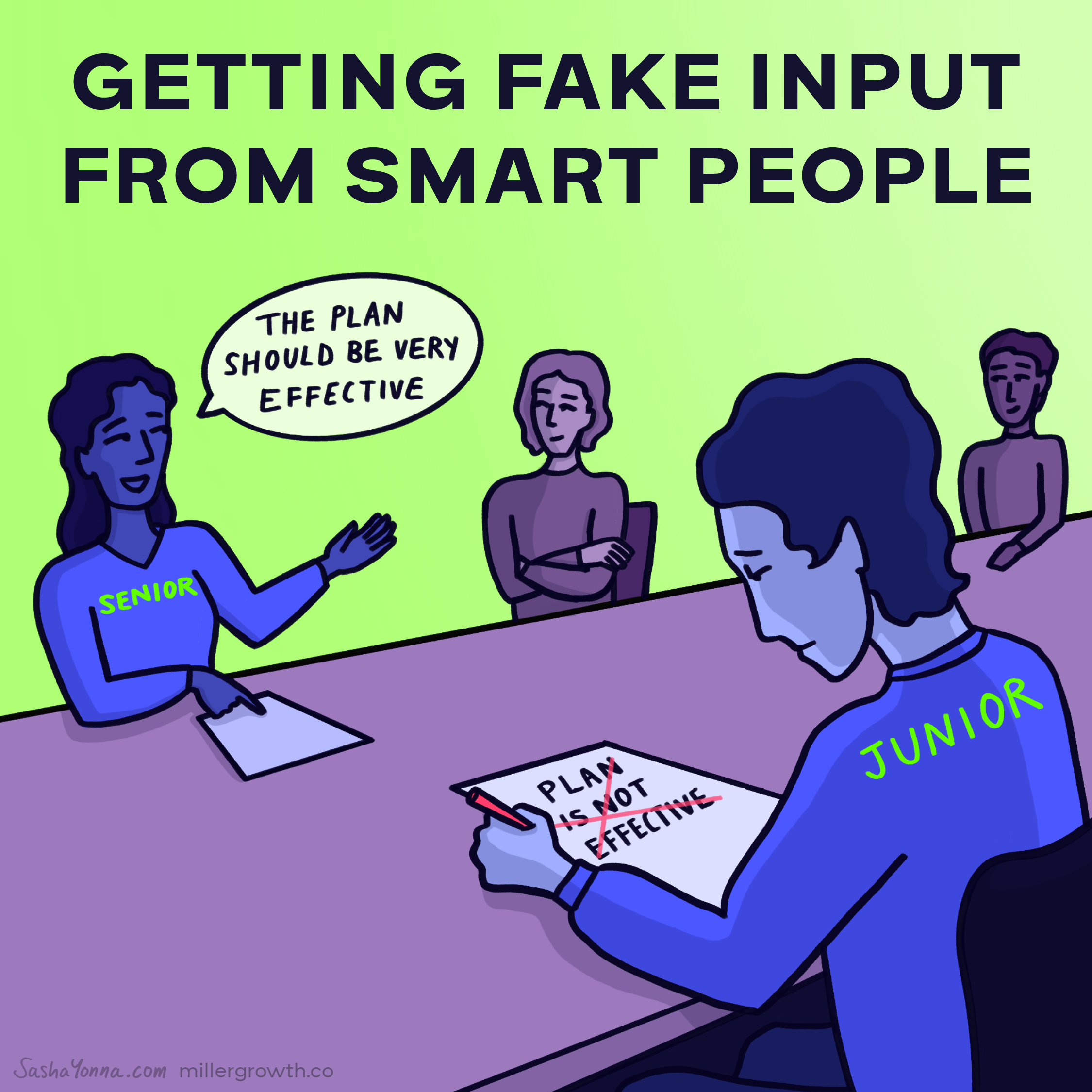
3️⃣ Not giving people the opportunity to deliver their input. As soon as the first person speaks, they anchor everyone else. Perhaps that first person has an excellent idea, and other folks think, "Ah, my thought wasn't as good as that. I won't bother mentioning it." Maybe the first contribution is from someone senior, and others think, "Well, if that's what they think, they're probably right - they've got more experience than me." Maybe a couple of people simply dominate the conversation. Maybe someone is embarrassed that their idea will be laughed at. Either way, the input is polluted before most of it reaches the table. Techniques for fixing this are below.
4️⃣ Not showing that the input is genuinely valued. If you follow someone's idea, they should know they had an impact on the decision. If you don't follow it, they should know it was a valuable thought to consider and that you want them to keep giving input. That means following up later so people see how their contribution was used. Input dries up when people think it goes into a void.
All of the above applies regardless of whether you're asking the people who report to you, those further down the tree, your peers, your managers, or people outside your company altogether.
Some specific ways to address 3️⃣:
Ask people to share their input with you before the conversation, in writing or verbally, but not to share it with the others involved.
Have people bring their key ideas written down.
When you go through the ideas, ask the most junior person to make their suggestion first.
Require people to describe the idea they wrote down, even if they no longer think it's valid. They might be wrong about that!
On the first pass, allow a couple of clarifying questions, but don't debate each idea in detail before the full set is on the table.
Have a chair who makes sure all voices are heard. If that's not your personal strength, delegate it.
Make it really, really clear that there are no stupid ideas.
When something is raised by someone junior, make sure it's given proper airtime.
If a key question surfaces mid-meeting, stop. Give everybody two minutes to think and write down their initial reaction, then go through those one by one - junior person first.
Good input isn't luck. It's designed.
I've got a checklist for running meetings that surface substantial and useful input - happy to share it if it would be helpful.
If this was useful, stay close to the thinking.
Get practical GTM insights and strategic breakdowns in your inbox. Weekly.
Related Posts
GTM & Strategy, Leadership
2026-08-10
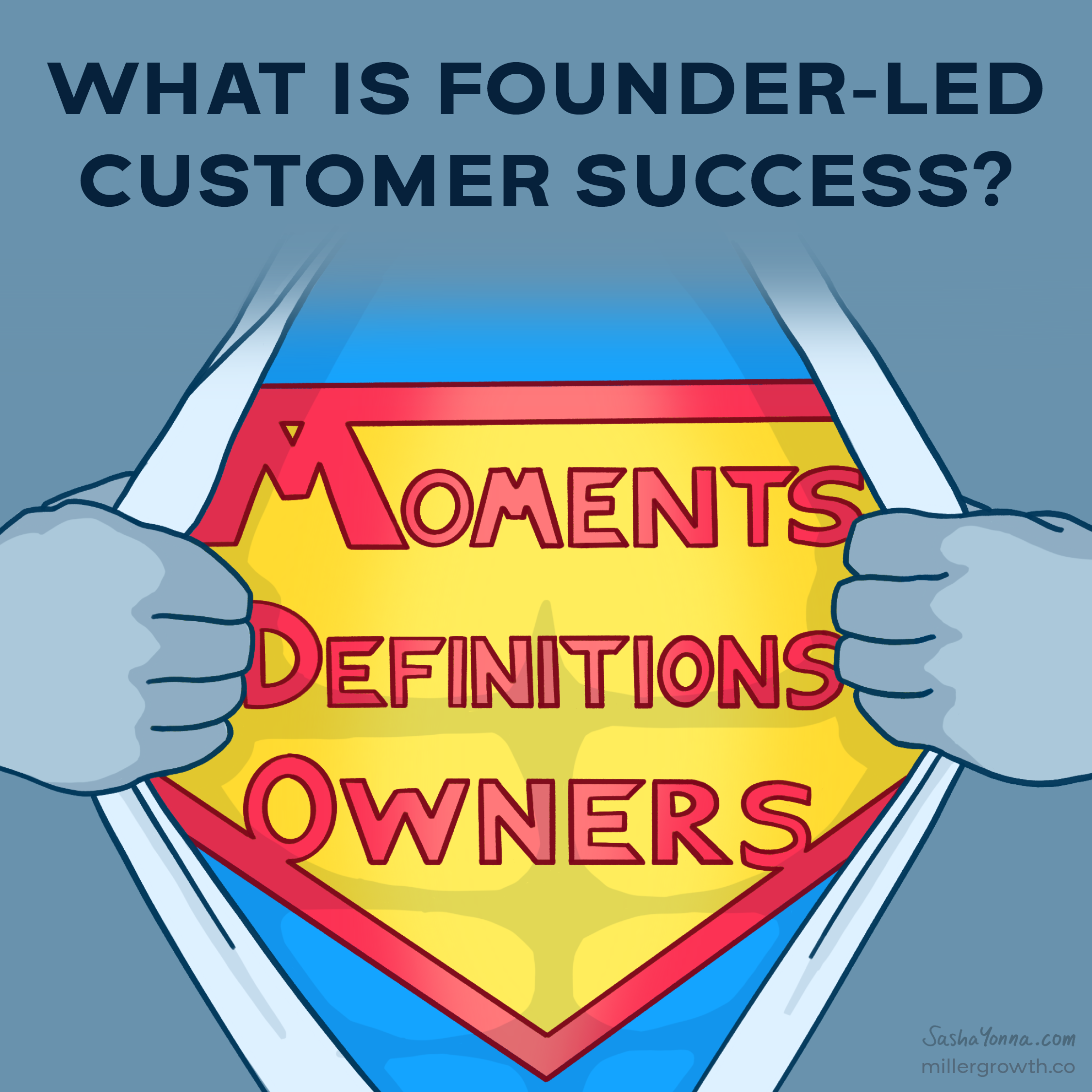
You solved Founder-led sales. What about Founder-led Customer Success?
Founder led Customer Success is the parallel of Founder led Sales, but doesn't get anything like the same level of recognition. If you are growing significantly, this will quickly become an issue, and you need to migrate Success to a repeatable process in the same way you would have done with Sales.
AI in GTM / RevOps, GTM & Strategy, Leadership
2026-08-03
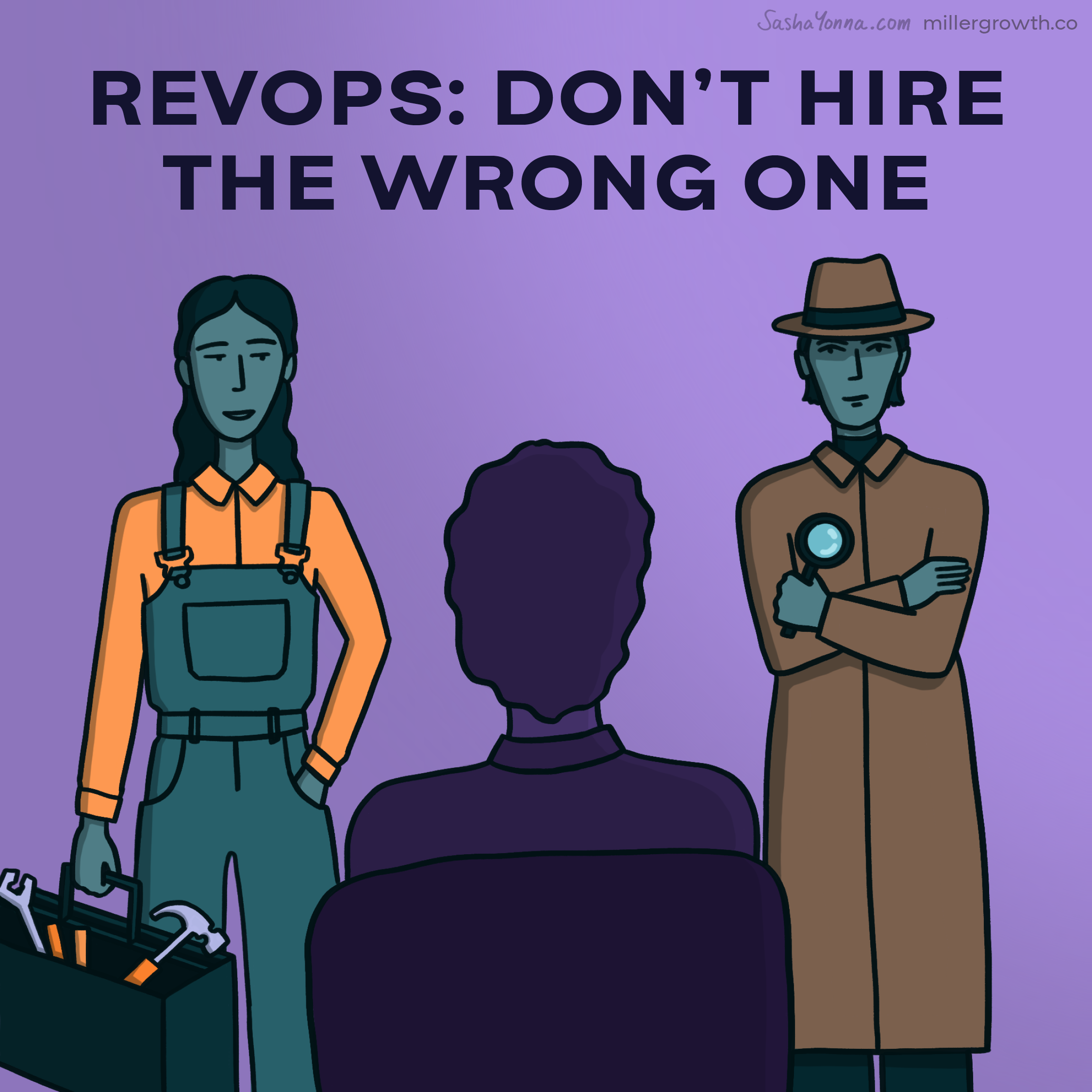
There are two RevOps hires. Most companies hire the wrong one.
Most companies hire RevOps expecting both operational rigour and commercial insight - and get neither. The two roles require different skills, and conflating them in a single job spec is one of the more expensive hiring mistakes a scaling revenue team can make.
Leadership
2026-07-27
Getting fake input from smart people
Most leaders think they want honest input. What they actually get is anchored agreement, premature consensus, and silence from the people who had the most useful thing to say. The problem is rarely the team - it's how the question gets asked and how the room gets run.
Relevant resources
Tools and insights for improving your revenue engine
Demo Training
Coach winning demos

Discovery Training
Qualify deeper, faster
AE Toolkit
Hire top performers
See more resources →