Is fractional just unemployment?

Leadership, General
Who is it for?
For founders, operators, and commercial leaders evaluating fractional work from either side of the table.
When to use?
Use when deciding whether fractional leadership is a serious operating model or just a temporary label.
30 Nov 2025
Fractional work attracts both skepticism and misuse. This article examines the difference between strategic fractional leadership and disguised underemployment.
The founder of a very successful recruitment firm said he hates “fractional” as a title, because it’s just a way of saying out-of-work.
However, I and others are making it a genuine business. Who’s right?
The numbers support the recruitment founder: LinkedIn has over 200,000 fractional leaders today, three years ago there were less than 5000. I can believe that 195,000 people lost their jobs in that period. It’s less likely that 195,000 people moved into portfolio careers.
fractional leaders diagram.png
That said, I fell into my role serendipitously: I lost my job due to Covid and found lots of people who wanted advice and support, but not a full-time CRO.
Since March 2020, I have worked with over 70 companies, I have been a fractional commercial leader 10 times, delivering direct and immediate value. In almost every one of those fractional roles, the CEO offered me a full-time position. Extremely gratifying, but not what I want: after 25 years of running sales teams, managing the quarterly mountain climb, dealing with company politics and process, I am more than happy stepping in, bringing significant change and value, and stepping out in favour of a full-time hire.
It’s certainly true that a lot of fractional leaders take this path when they find themselves unemployed. Sometimes it’s just a helpful way to look busy when you are searching for jobs, sometimes it’s a genuine desire to try out the fractional world.
Many such folks manage a fractional role or two, then get asked to stay on full-time and jump at it.
To be a fractional leader, you have to have a certain personal characteristics:
1️⃣ you love learning a new industry in a matter of weeks - you can’t take a quarter to get to know the business
2️⃣ you can very quickly diagnose challenges and address them instantly
3️⃣ you’re happy with the uncertainty of where your next role is coming from.
For some, “fractional” is a stopgap.
For me, it’s freedom and the ability to help many companies.
If you’re considering the path, I’m happy to chat.
The founder of a very successful recruitment firm said he hates “fractional” as a title, because it’s just a way of saying out-of-work.
However, I and others are making it a genuine business. Who’s right?
The numbers support the recruitment founder: LinkedIn has over 200,000 fractional leaders today, three years ago there were less than 5000. I can believe that 195,000 people lost their jobs in that period. It’s less likely that 195,000 people moved into portfolio careers.
That said, I fell into my role serendipitously: I lost my job due to Covid and found lots of people who wanted advice and support, but not a full-time CRO.
Since March 2020, I have worked with over 70 companies, I have been a fractional commercial leader 10 times, delivering direct and immediate value. In almost every one of those fractional roles, the CEO offered me a full-time position. Extremely gratifying, but not what I want: after 25 years of running sales teams, managing the quarterly mountain climb, dealing with company politics and process, I am more than happy stepping in, bringing significant change and value, and stepping out in favour of a full-time hire.
It’s certainly true that a lot of fractional leaders take this path when they find themselves unemployed. Sometimes it’s just a helpful way to look busy when you are searching for jobs, sometimes it’s a genuine desire to try out the fractional world.
Many such folks manage a fractional role or two, then get asked to stay on full-time and jump at it.
To be a fractional leader, you have to have a certain personal characteristics:
1️⃣ you love learning a new industry in a matter of weeks - you can’t take a quarter to get to know the business
2️⃣ you can very quickly diagnose challenges and address them instantly
3️⃣ you’re happy with the uncertainty of where your next role is coming from.
If you are considering this path, let me know, I’m very happy to chat.
If this was useful, stay close to the thinking.
Get practical GTM insights and strategic breakdowns in your inbox. Weekly.
Related Posts
GTM & Strategy, Leadership
2026-08-10
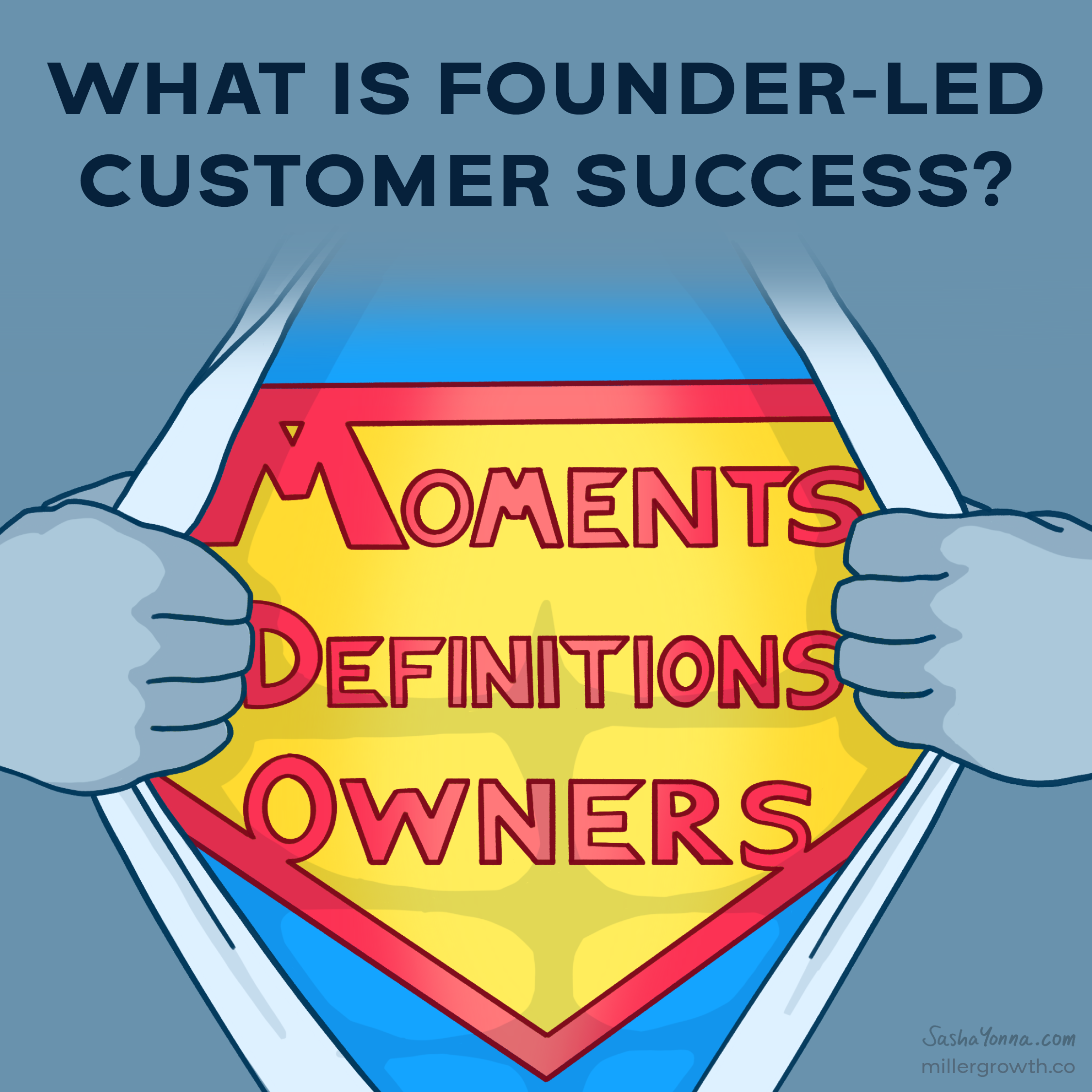
You solved Founder-led sales. What about Founder-led Customer Success?
Founder led Customer Success is the parallel of Founder led Sales, but doesn't get anything like the same level of recognition. If you are growing significantly, this will quickly become an issue, and you need to migrate Success to a repeatable process in the same way you would have done with Sales.
AI in GTM / RevOps, GTM & Strategy, Leadership
2026-08-03
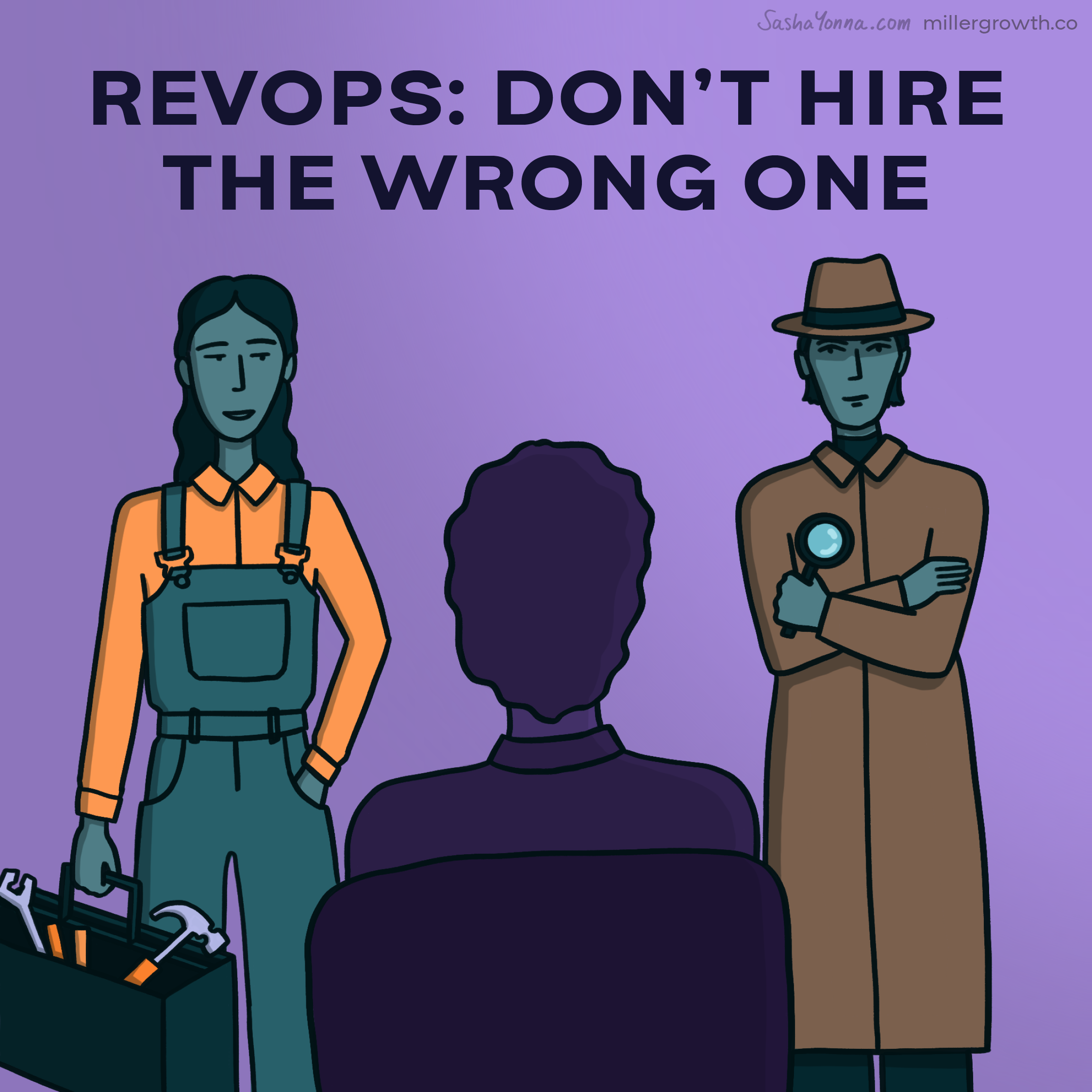
There are two RevOps hires. Most companies hire the wrong one.
Most companies hire RevOps expecting both operational rigour and commercial insight - and get neither. The two roles require different skills, and conflating them in a single job spec is one of the more expensive hiring mistakes a scaling revenue team can make.
Relevant resources
Tools and insights for improving your revenue engine
Demo Training
Coach winning demos

Discovery Training
Qualify deeper, faster
AE Toolkit
Hire top performers
See more resources →