Don't Hire a BDR. Hire Two

General, Leadership
Who is it for?
Founders and revenue leaders hiring first BDRs, AEs, or new market roles
When to use?
First sales hires or revenue targets hinging on a critical role succeeding
16 Mar 2026
Early sales hires rarely fail because of effort; they fail because they are isolated, unsupported, and untested. Hiring in pairs accelerates learning, improves execution, and reduces the commercial risk of a single point of failure.
There's a simple truth about hiring salespeople that many companies overlook: two people hired together will almost always outperform one hired alone - not just in aggregate, but individually.
Two BDRs learning together learn faster. They compare notes on what's working. They troubleshoot together. For your first BDRs especially - who need to blaze trails, create process, and refine messaging - doing this alone is brutally hard. Having a partner in that journey dramatically improves both their chances of success. Add in the healthy competition that naturally develops, and you've created a performance environment that a single hire simply can't replicate.
Two AEs give you great internal comparison. There's also a management benefit that's easy to underestimate. When you have two people in the same role, you can see performance differences clearly and help where needed. With only one hire, you might miss key signs.
Less risk. Hiring success rates in early stage businesses, particularly where BDR processes and management are still being built, mean that hiring in pairs significantly improves your odds of having at least one successful hire. The question isn't "can we afford to hire two?" It's "can we afford the risk of hiring only one?"
This scenario plays out constantly. Very recently I worked with a Series A client who hired what looked like a very promising first enterprise AE. After several months, for various reasons, it didn't work out. Their planned 3x revenue growth - from $2M to $6M ARR - was suddenly thrown into doubt. Six months of momentum, gone. A second hire running in parallel would have been cheap insurance against that outcome.
The operational efficiency case is stronger than it first appears. Hiring two people instead of one is not twice the work - the job spec is the same, you're sourcing from the same pool, and you're running the same process. Whereas re-running a process six months later doubles the work. Onboarding is similar - the induction, the training, the ramp process are all largely the same whether one person is sitting in the room or two.
Key times to lean into this
Entering a new market or segment where you're still figuring out the playbook
Hiring your first person in a role - first BDR, first AE, first enterprise seller
Scaling rapidly and can't afford delays
When your revenue targets depend on this hire succeeding
If you're in any of these situations, hiring in pairs isn't a luxury - it's the efficient way to drive success for your company and your team.
Whether you're hiring one or two, make sure your recruitment process is rigorous. I'd be happy to share my interviewing toolkits if that would be useful - just let me know.
I’d love to hear your thoughts. Comment here or reply.
If this was useful, stay close to the thinking.
Get practical GTM insights and strategic breakdowns in your inbox. Weekly.
Related Posts
Leadership
2026-07-27
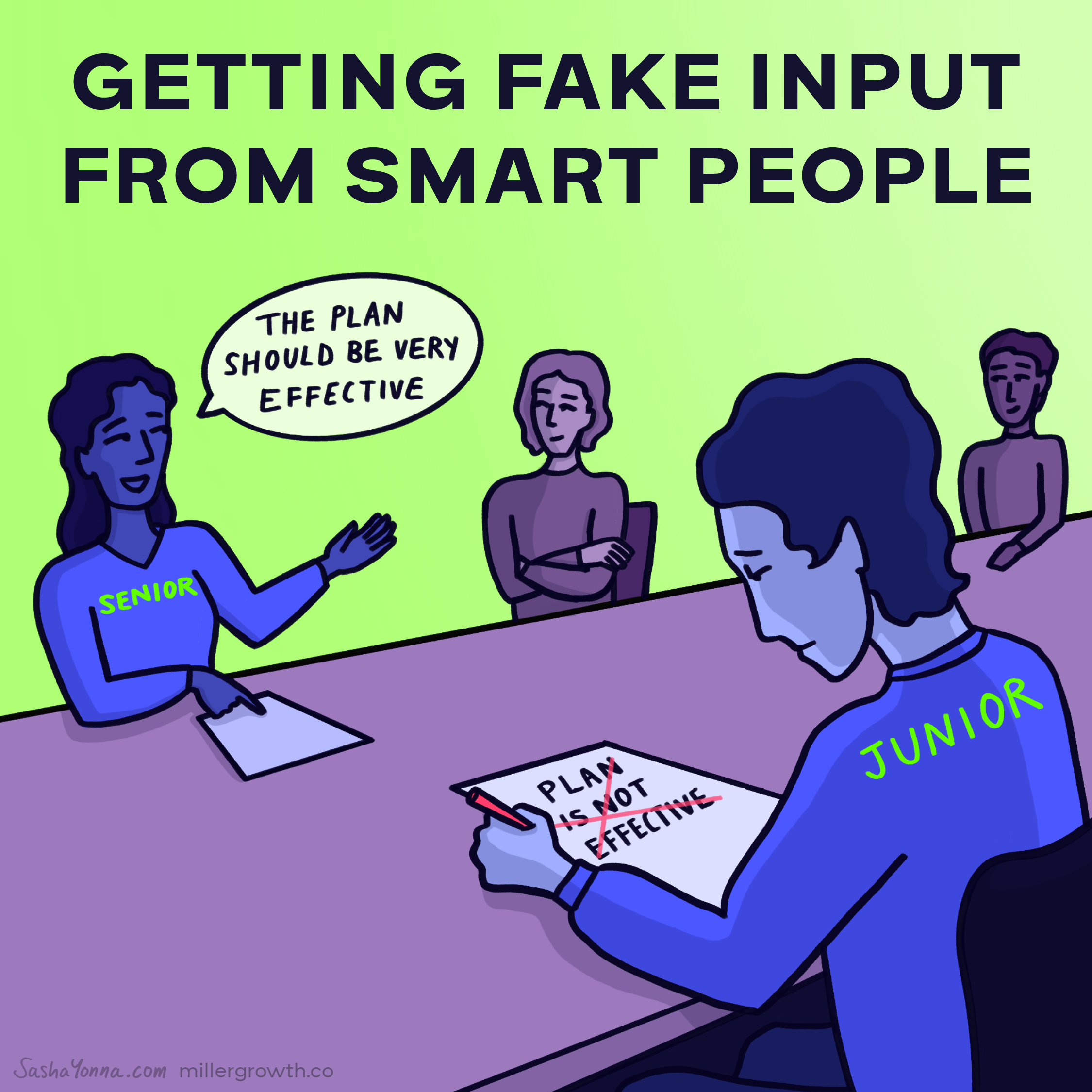
Getting fake input from smart people
Most leaders think they want honest input. What they actually get is anchored agreement, premature consensus, and silence from the people who had the most useful thing to say. The problem is rarely the team - it's how the question gets asked and how the room gets run.
GTM & Strategy, Leadership
Relevant resources
Tools and insights for improving your revenue engine
Demo Training
Coach winning demos

Discovery Training
Qualify deeper, faster
AE Toolkit
Hire top performers
See more resources →