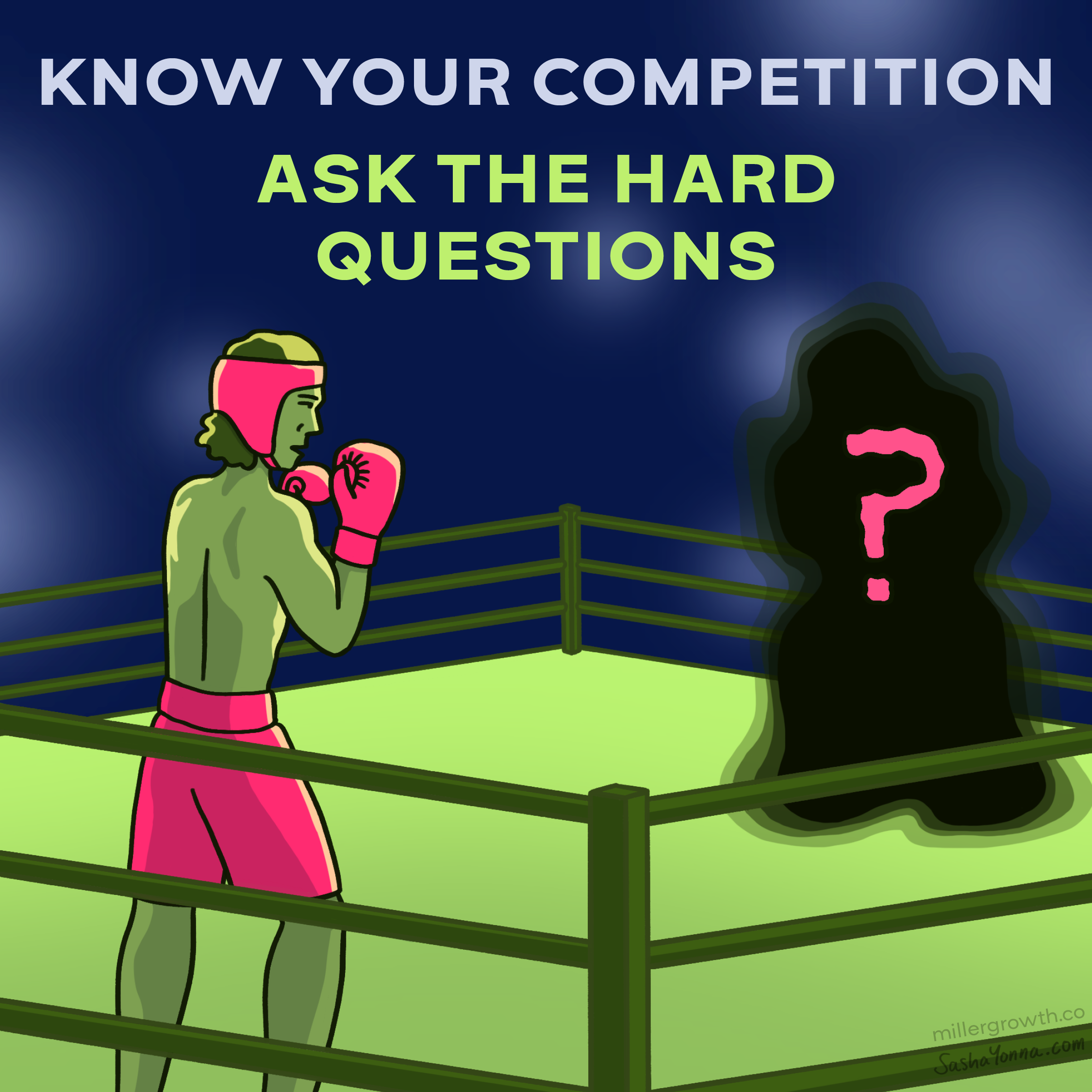
You MUST know your competition
Pipeline & Deal Velocity
Who is it for?
B2B sales leaders and founders managing field sellers or reviewing lost deals.
When to use?
When deals are being lost to competitors you didn't know were involved, or when sellers can't hold the line on price.
2026-08-17
Most deals lost to a surprise competitor weren't lost at the close - they were lost weeks earlier when the seller didn't ask who else was in the room. Asking who the competition isn't a risk; not knowing is.
Ask who your competition is. It won't send buyers shopping.
I often hear two things from Sellers: one when the deal is lost and the other when they might be winning.
1️⃣ "We just discovered we lost to XYZ. We didn't even know they were being considered."
2️⃣ "They're pushing back hard on price, and I don't know how to hold the line."
Both of them come down to the same thing: not knowing the competition.
The surprise loss
When a Seller tells me they lost to XYZ, I don't react badly. It happens from time to time. We learn from it and work out how to position better next time.
What frustrates me is the second half: "we didn't know they were being considered."
Why on earth not?
"They didn't tell us." "We knew they were talking to a few other vendors." "Someone new joined and preferred a supplier they'd used before." All typical, all useless (apologies if you've reached for one recently).
The reality is you didn't ask the right (hard!) questions. It is never the prospect's fault for not telling you things you need to know.
The price fight
The only way to handle a price challenge is to know what happens if you don't concede. And the only way to know that is to understand your competition.
Sometimes the alternative is do-nothing - you simply haven't shown the customer enough value yet. Sometimes it's a cheaper competitor. If it's the latter, you need to have differentiated on product, service, or relationship, so that they aren't just a cheaper version of you.
(If they are just a cheaper version of you, get back to Product. It's time to work out how you're actually different.)
So once you know who you're up against, you know whether a price change is necessary.
Know the competition
How do you find out? You ask.
"What other alternatives are you looking at?" "Where are we falling short against your other options?" "Is anyone on your team leaning towards a different solution?"
Sellers worry these questions send the buyer off to check out the competition. Rarely. Buyers aren't ignorant - they know alternatives exist and they'll go looking regardless. If you don't know who you're competing with, you damage your chances. And if the competitor is asking these questions, you've handed them the advantage.
Talk to your Champion
In a big group setting, prospects are cautious about what they'll reveal. So have the conversation with your Champion or coaches, one-to-one. Face-to-face is better still. The closer the relationship and the more private the setting, the more you'll learn.
Go and ask who your competition is. And if you're not sure how to open that conversation without it feeling like an interrogation, I'm happy to share the questions I use - just let me know.
If this was useful, stay close to the thinking.
Get practical GTM insights and strategic breakdowns in your inbox. Weekly.
Related Posts
Pipeline & Deal Velocity
2026-08-25
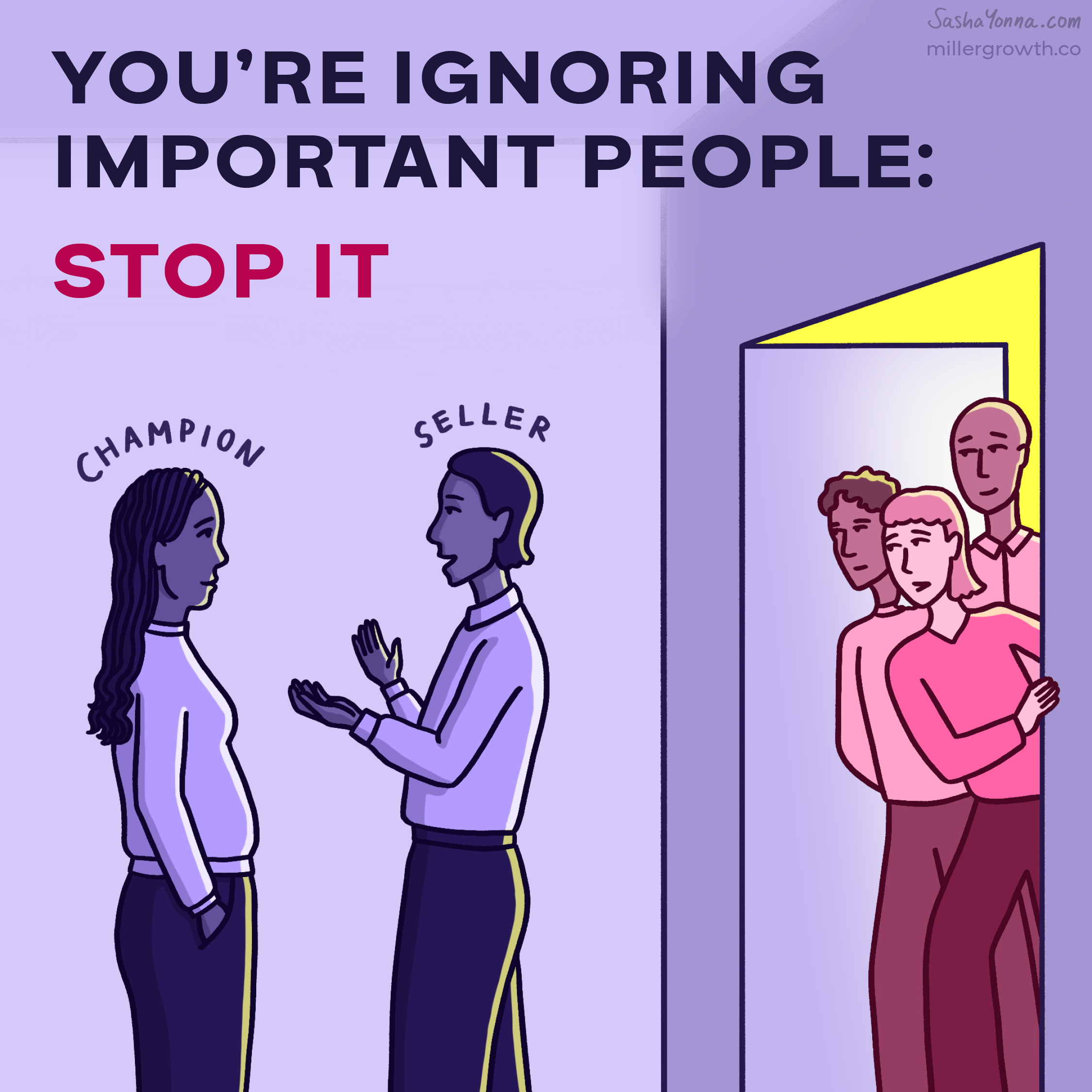
You're ignoring important people - stop it
Most sellers in a large deal build one or two relationships and assume the rest don't matter. They're wrong. The people on the periphery hold information - competitor intelligence, internal dynamics, critical feature concerns - that your main contact either won't share or doesn't know.

Discovery, Pipeline & Deal Velocity
Relevant resources
Tools and insights for improving your revenue engine
Demo Training
Coach winning demos

Discovery Training
Qualify deeper, faster
AE Toolkit
Hire top performers
See more resources →