Title: An interim CRO’s first job is planning their own exit
Leadership
Who is it for?
CEOs hiring an interim commercial leader; interim CROs stepping into a gap.
When to use?
When a CRO has just left and you need to decide how to cover the role and what comes next.
2026-11-23
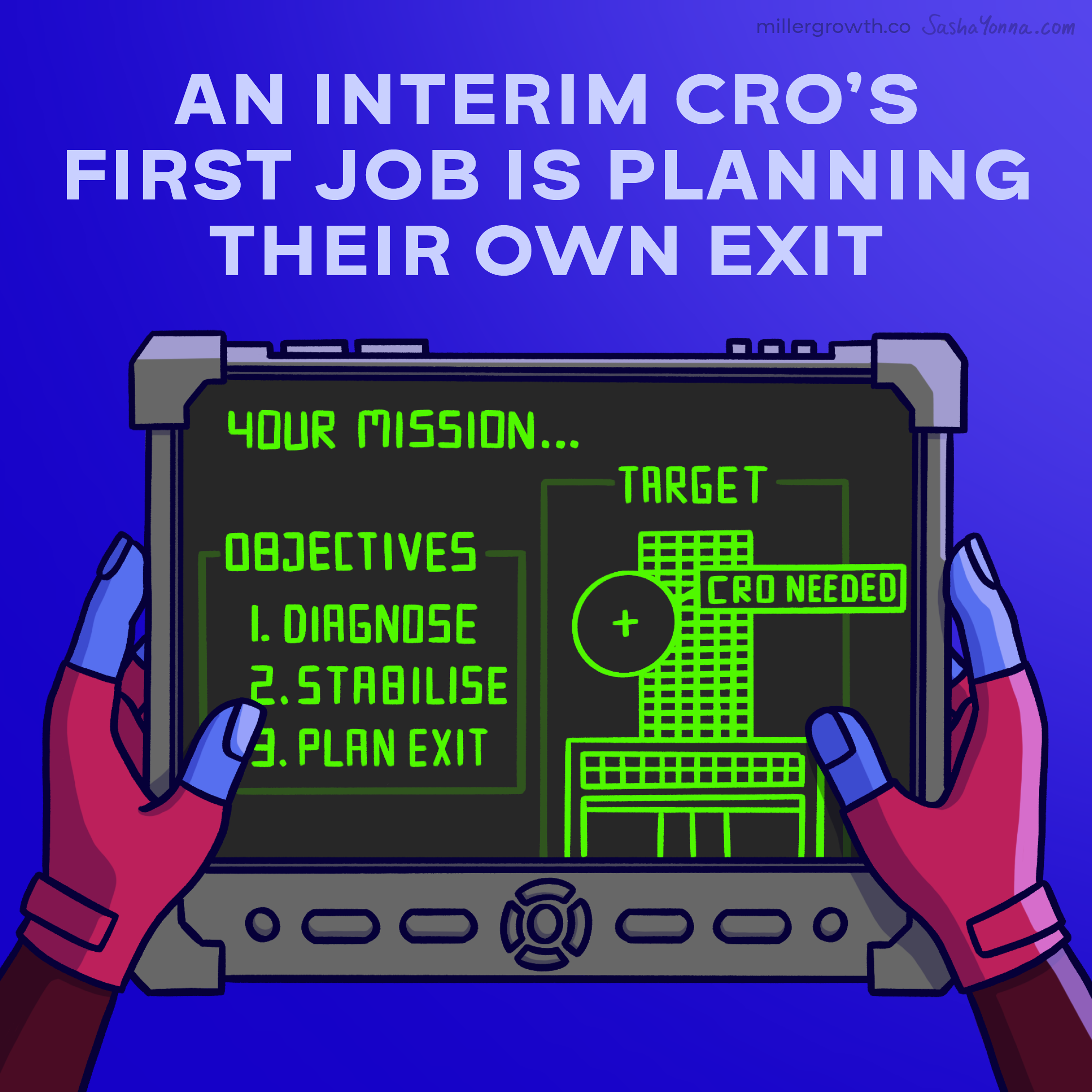
An interim CRO is usually brought in to fix something, and the instinct is to start fixing straight away. The better first question is how this ends: who replaces them, when, and how that affects the amount of change the interim drives.
Most times I step into an interim CRO role, the previous CRO has left, whether they’ve jumped or been pushed. That means there are problems to solve. (Maternity cover, or a fast-growing company working out its executive structure, is calmer, but most of what follows still applies.)
This is for both sides: the CEO hiring an interim, and the interim stepping in. Where the advice differs, I say so.
Diagnose
The hardest call comes first: how long to spend understanding the situation before acting. I have got this wrong in both directions. Sometimes I started fixing things before I understood how deep the problems went. Other times I took too long when the team needed hands-on help sooner.
Interims: speak to the CEO, a couple of other executives and about three of the key ICs or managers in the teams you will own. The ICs and managers will show you how deep the problems go.
CEOs: make those conversations easy to arrange, and tell the team why they are happening.
Both of you: when you estimate the time commitment, include hiring. Allow for the empty roles, and for the people likely to leave.
Stabilise
Once the interim is in place, there are two early requirements.
1️⃣ Get a credible view of the quarter. Review the forecast, inspect the major opportunities and distinguish inherited problems from issues that need urgent intervention.
2️⃣ Protect confidence and relationships. Give the team clear direction, and maintain continuity with customers and other functions.
Plan the exit
Soon after, start planning the exit. It will take at least six months to hire and onboard a new CRO, so the CEO and interim need to decide early whether that is the right next step. If it is, decide what skills the new CRO needs and how and when to start the process. If it isn’t, decide how the responsibilities will be covered by existing or new people.
This decision also tells you what to do with everything else. Once you know the endgame and the timeframe, it’s clear which things to change significantly and which to babysit until the new leader is in place.
There will still be unknowns that turn up unexpectedly. That’s true in any business, and more so with an interim executive. A defined endpoint gives you something to decide against when they do.
I’m happy to share the questions I ask in those first diagnostic conversations - just let me know.
If this was useful, stay close to the thinking.
Get practical GTM insights and strategic breakdowns in your inbox. Weekly.
Related Posts


Relevant resources
Tools and insights for improving your revenue engine
Demo Training
Coach winning demos

Discovery Training
Qualify deeper, faster
AE Toolkit
Hire top performers
See more resources →