The Promised Land

General
Who is it for?
For revenue teams trying to keep pipeline honest and predictable.
When to use?
Use when late-stage deals slip and you need to understand what really blocks a decision.
17 Mar 2025
Growth often requires crossing uncomfortable thresholds. This post reflects on what sits beyond incremental improvement.
In the ideal world, you do not need to sell your product to your prospects. Instead, they will sell it to themselves and to their colleagues. To maximise the chances of that happening we need to avoid pitching our solution, features and benefits, and instead allow the customer to find their way to it themselves.
We do this by helping them see where they want to get to, helping them understand what the right type of solution looks like, and ultimately giving examples of how we have delivered that type of solution. Note that we only talk about our product at the end of this.
For my next few posts, I am going to suggest some great questions that get prospects thinking about how your solution will help them, and how they can share that internally.
What does your world look like in 6 months if you have a really successful deployment of the new solution?
This helps you understand what is most important to them. It gets them emotionally excited about where they could get to. It leads to a mutual understanding of what the goals are. You can ask this question to most people you engage with.
Another angle on this question is to paint the promised land for them. After they have acknowledged the challenges with their current situation, describe a client that has deployed your solution and how they now operate - with all the frustrations, cost issues or missed opportunities behind them. Note: describe the way the client now works, not all the features and services you provided.
And a final flavour of the question:
Imagine you decide not to move ahead with this project. What will be the most aggravating consequence?
Often, your primary competition is “do nothing”. We need our prospects to recognise the cost of doing nothing – it is always higher than they give it credit for due to status quo bias. And to feel the emotional frustration of doing nothing. As above, this is also a question we can ask to anyone we meet in the organisation.
If this was useful, stay close to the thinking.
Get practical GTM insights and strategic breakdowns in your inbox. Weekly.
Related Posts
General
2026-03-30
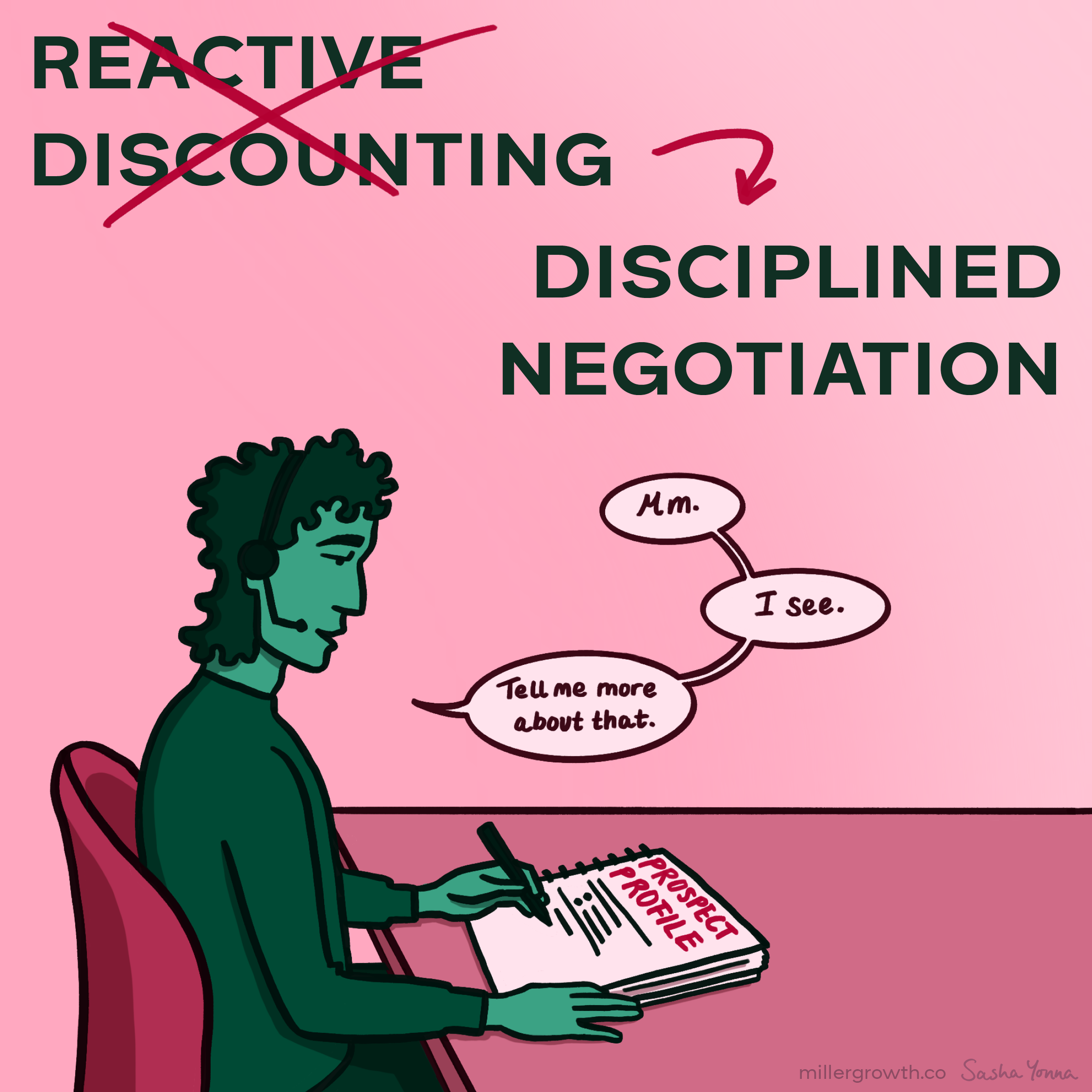
From Reactive Discounting to Disciplined Negotiation at Scale
When price pressure appears, most sales teams default to discounting before they fully understand what the buyer actually needs. This case study shows how agilio restructured negotiation behaviour across a 14-person team - and what changed commercially when they did.

Relevant resources
Tools and insights for improving your revenue engine
Demo Training
Coach winning demos

Discovery Training
Qualify deeper, faster
AE Toolkit
Hire top performers
See more resources →