Your Champion is not a Champion until they do this

Discovery, Pipeline & Deal Velocity
Who is it for?
B2B sales leaders and sellers carrying complex, multi-stakeholder deals.
When to use?
When a deal feels progressing but access to the Economic Buyer or key stakeholders remains blocked.
2026-06-29
Most sellers mistake enthusiasm for championship. A real Champion does two things: they advocate for your solution when you're not in the room, and they have the influence to help make it happen. Without both, you don't have a Champion.
A Champion is defined by what they do when you are not in the room, not by how enthusiastic they are when you are.
Sellers often tell me how engaged their Champion is. They respond quickly to emails, attend every meeting, tell you how much they like your product. I hear some version of this in almost every deal review I run. That is not enough.
A true Champion needs two things: advocacy and influence.
Advocacy
Do they actively want your solution to win?
For someone to advocate properly, they need a reason to care. The project must matter to them personally.
Perhaps it solves a painful problem for their team. It might help them deliver an important goal, increase their visibility or move their career forward. Maybe they identified the problem and have put their reputation behind fixing it.
If your project succeeds, something should improve for them. If it fails or disappears, they should feel the impact.
Without that personal connection, they may like your solution. But why would they spend time and political capital promoting it internally?
Liking something and fighting for it are very different things.
Will they explain your value to other people? Help build the business case? Correct misunderstandings when you are not present? Defend the project when budget or priorities are challenged?
That is advocacy.
Influence
Wanting you to win is not enough. Can they help make it happen?
Do they understand how decisions are really made? Can they introduce you to the Economic Buyer, procurement and other important stakeholders?
Can they tell you:
👉 How previous purchases were approved?
👉 How their boss, or their boss's boss, will benefit from your solution?
👉 Who is advocating for an alternative solution, including doing nothing?
👉 Who the key sceptics are, and why?
👉 Who can stop the purchase?
👉 Which Decision Criteria will really determine the outcome?
And can they help you navigate those issues?
Someone who advocates strongly but lacks influence is a valuable supporter. Someone with influence who does not advocate for you is an important stakeholder. Neither is a Champion.
You need to test your supposed Champion.
Ask for the Economic Buyer introduction. Ask to meet procurement. Ask who supports the alternatives. Ask them to help you engage the biggest sceptic.
If they cannot answer these questions or help you take these actions, investigate why. Perhaps they lack influence. Perhaps they do not trust you sufficiently. Perhaps they are not genuinely convinced.
In my experience, most Sellers overestimate advocacy and influence. The enthusiastic contact feels like a Champion. Often they are not.
Advocacy tells you whether they want you to win. Influence tells you whether they can help you win. You need both.
If this was useful, stay close to the thinking.
Get practical GTM insights and strategic breakdowns in your inbox. Weekly.
Related Posts
Pipeline & Deal Velocity
Pipeline & Deal Velocity
2026-08-25
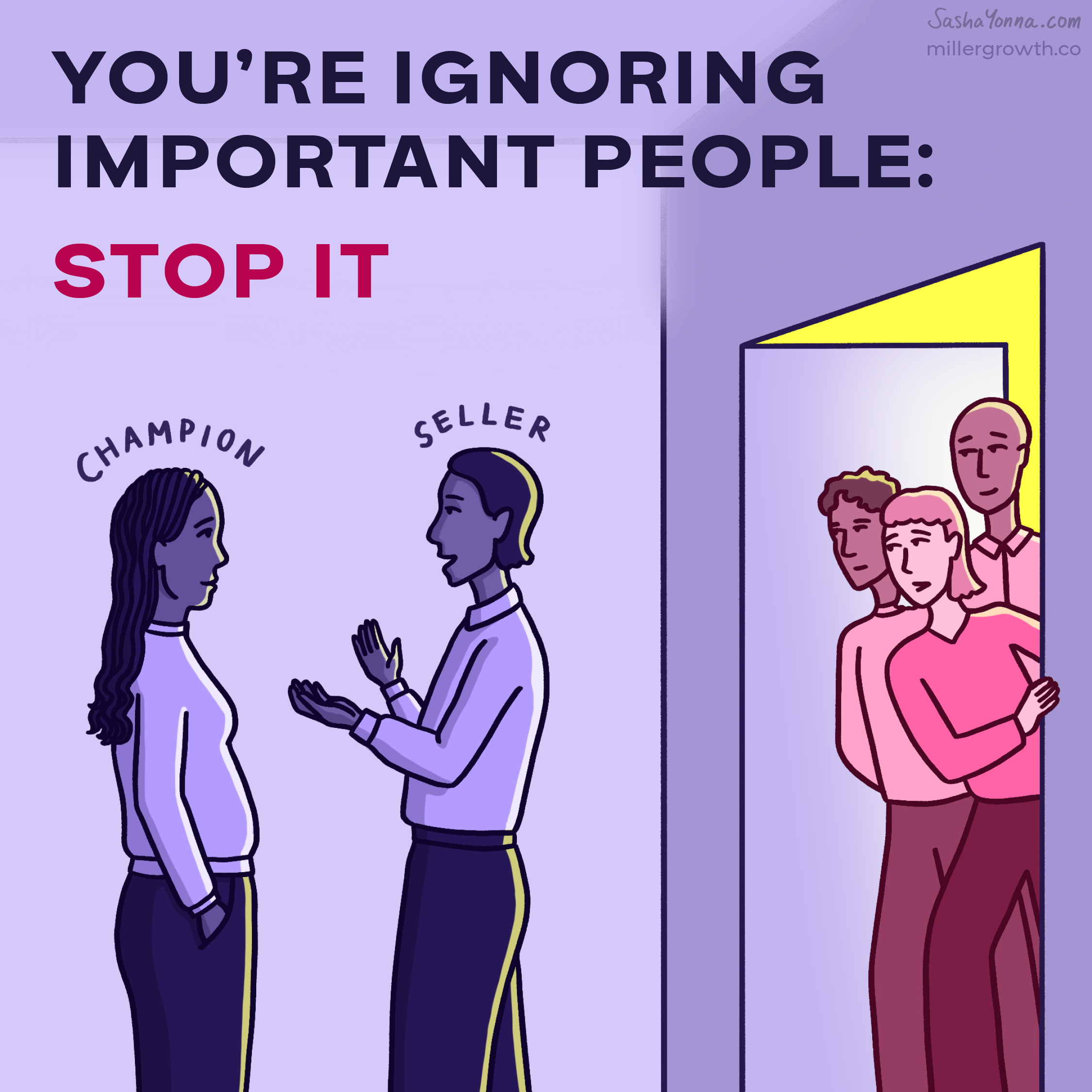
You're ignoring important people - stop it
Most sellers in a large deal build one or two relationships and assume the rest don't matter. They're wrong. The people on the periphery hold information - competitor intelligence, internal dynamics, critical feature concerns - that your main contact either won't share or doesn't know.
Relevant resources
Tools and insights for improving your revenue engine
Demo Training
Coach winning demos

Discovery Training
Qualify deeper, faster
AE Toolkit
Hire top performers
See more resources →