Top performers don't discount.

GTM & Strategy
Who is it for?
For founders and revenue leaders shaping pricing and packaging.
When to use?
Use when you need a fast, practical reset on how you’re approaching the problem.
10 Jun 2025
Discounting signals positioning weakness more than pricing pressure. This piece reframes when and why it appears.
“Top performers don’t discount.”
‘No’ is the best response to a request for discount:
I stole that quote from Ebsta’s latest GTM Benchmarks report (thanks Guy Rubin and team).
No discount ➡️ less negotiation time ➡️ faster deals.
🙄 How many times have you heard a Seller say “the customer says the budget is tight and asked us to reduce by 25% to get close to the competition, I think we can get away with a 15% reduction”?
💡 When I hear this, I say “why don’t we just say no?”
Customers negotiate because they believe they can. But it doesn’t have to be this way.
⛔ You don’t negotiate if you buy a new freezer from a high street store.
⛔ You don’t negotiate if you are buying AWS credits.
⛔ You don’t negotiate at a restaurant.
A founder I work closely with put it succinctly:
“Many Sellers don’t realise that the customer will pay a fair price for a product they need, rather than a low price for a competitor they don’t want”.
💵 Your pricing has to be sensible in the market and reflect the value you deliver
🤔 From there, 10% or 20% price reduction is not relevant to the value the customer gets.
😞 If the real difference in value between you and the competitor is 20% of the list price, then you are commoditised. Time to look at how you’re going to build real differentiation.
Otherwise, just say no! Politely, but firmly.
One pricing tactic I do support: offer the customer multiple options, each one of which you’re happy with, but which give them control over how they spend. For example you might offer:
1️⃣ a pay-as-you-go deal – no discount, no commitment
2️⃣ a two-year commitment to a minimum level with a reduced price per unit
3️⃣ an unlimited use licence for four years, with an agreed but increasing price per year.
It’s possible that there will be a combination of these options which is better for you and the client, which is fine, as long as you are retaining the value which is relevant to you.
Lastly, if you haven’t read the book Never Split The Difference by Chris Vos, you should. Full of great tips about how you listen and engage carefully through negotiation, without giving away what matters to you.
If this was useful, stay close to the thinking.
Get practical GTM insights and strategic breakdowns in your inbox. Weekly.
Related Posts

GTM & Strategy, Leadership
2026-08-10
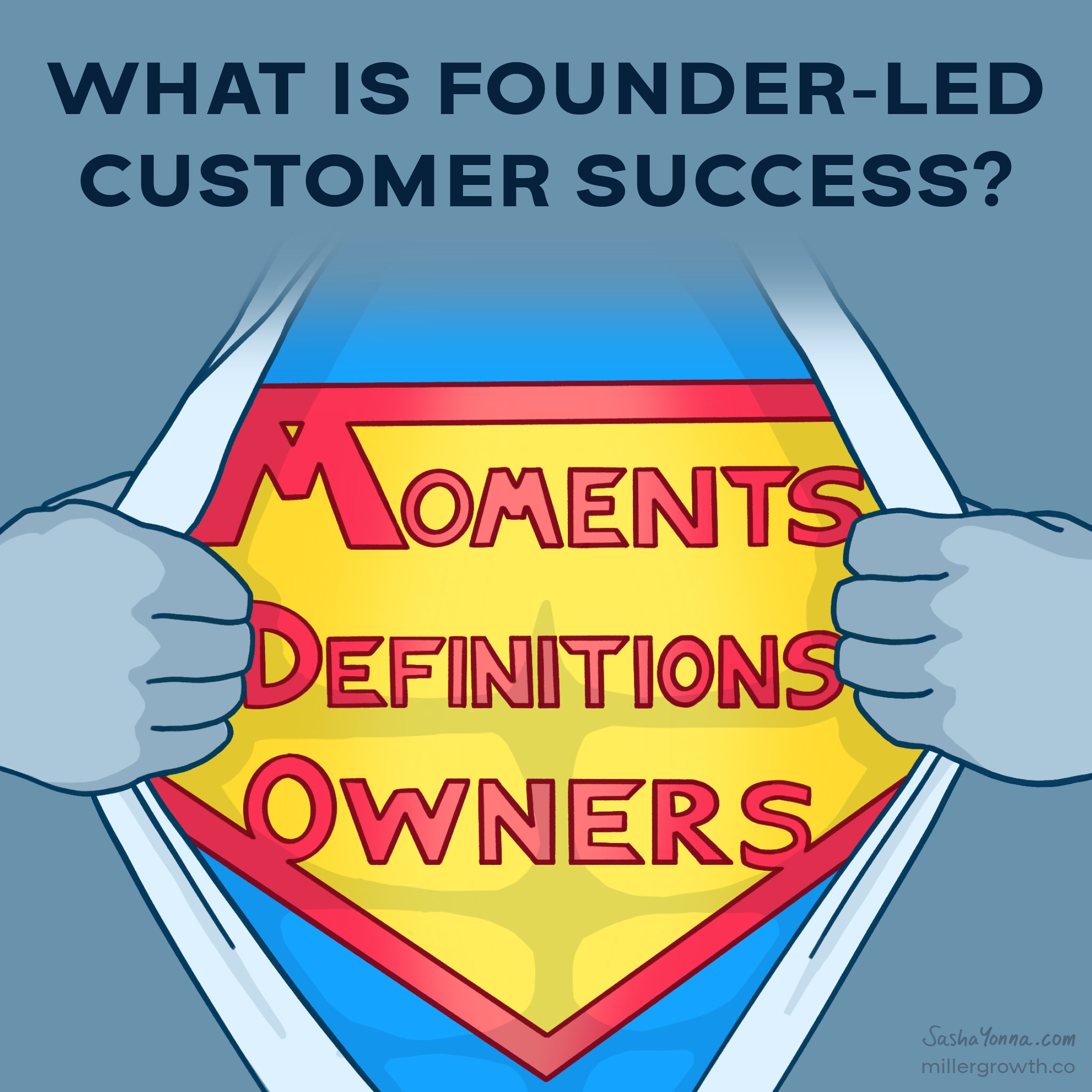
You solved Founder-led sales. What about Founder-led Customer Success?
Founder led Customer Success is the parallel of Founder led Sales, but doesn't get anything like the same level of recognition. If you are growing significantly, this will quickly become an issue, and you need to migrate Success to a repeatable process in the same way you would have done with Sales.
Relevant resources
Tools and insights for improving your revenue engine
Demo Training
Coach winning demos

Discovery Training
Qualify deeper, faster
AE Toolkit
Hire top performers
See more resources →