Their Paperwork Process is your job
Pipeline & Deal Velocity
Who is it for?
B2B sales leaders and sellers managing complex, multi-stakeholder deals.
When to use?
When a late-stage deal is at risk of slipping past quarter end due to process you don't fully understand.
2026-09-14
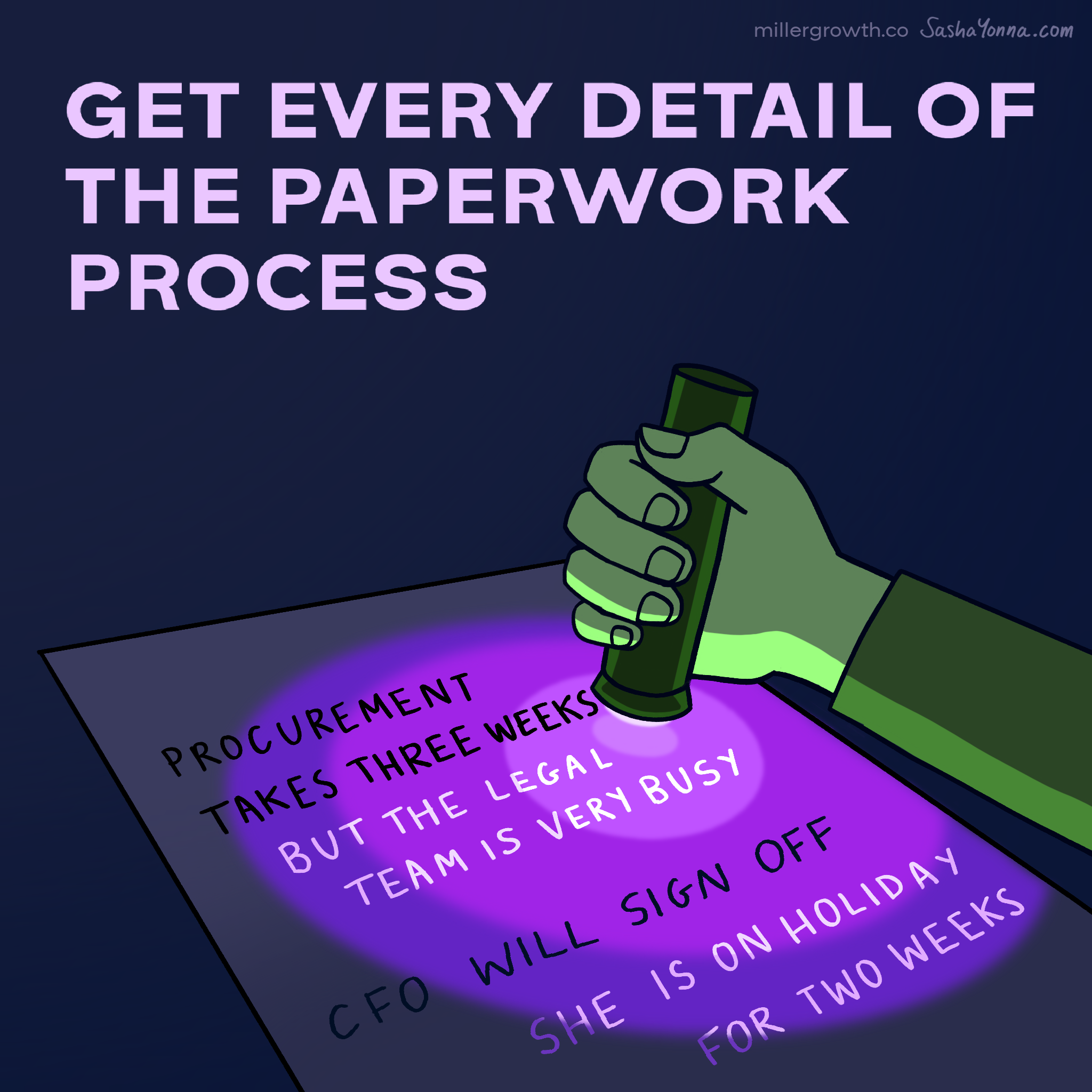
Most sellers treat the paperwork process as the buyer's problem once the decision is made. It isn't. It's the part of the deal cycle you understand better than your buyer does, and the part that quietly kills quarters when you don't own it.
Have you ever had a frustrating moment at the end of the quarter when you discover a rock-solid, nailed-on deal is going to close at least a week too late because you didn't realise there was a complex internal approvals procedure running through SAP Ariba? Or that the DPA needed to be reviewed by the DPO? Or maybe the signatory just happens to be on holiday that week.
Of course you have. And it should never happen.
Most sellers treat the paperwork process as the buyer's admin - something that happens to a deal once the decision has been made. It isn't. It's the part of the deal you understand better than your buyer does, and the part that quietly kills quarters.
Nobody on the buying side is responsible for getting your contract signed this quarter
Sellers are highly attuned to quarter end. They know how much it matters to them and to the company, and it shapes everything they do in the last three weeks.
Buyers have no attachment to that date at all. They may work in a department that doesn't think in quarters. They may have quarters that don't line up with yours. They may understand your position perfectly well and still have a legal team with a three-week backlog.
Whichever it is, your quarter is not their problem.
The P in MEDDPICC - Paperwork Process - exists for exactly this reason. Work out what the paperwork process is, from beginning to end. It sounds simple, but many sellers never get past the first answer they're given.
Challenge the answer you get
1️⃣ "Steve, the CxO, can sign it off, and once Marie has confirmed she's happy with the test results, we're good to go."
That's not a Paperwork Process, it's a Decision Process (and not a detailed one). Knowing the CxO can “sign it off” (and what does that mean exactly?) tells you nothing about who does the looks at the contract, who runs the IT security review, or whether there's a vendor onboarding process waiting to bite you.
2️⃣ "Procurement is pushing the paperwork through and said it should take about three weeks."
Better. Procurement should know how to do this. But three weeks from when? Are they assuming you'll accept their DPA without question? Does their legal team have capacity, while they're also closing out their own quarter? This is someone else's estimate of someone else's workload - not something to rely on in your forecast.
3️⃣ "It's very lightweight. They just need to check the contract, and then our main contact can sign it herself."
This sounds credible and your champion believes it. But is it correct? Who checks the contract? Is checking all they do? And does "the contract" include IT security, a data processing agreement, signing up to forty-seven corporate policies and accepting 90-day payment terms?
None of these give you what you need: confidence in the deal timing.
Ask the difficult questions
If you're selling anything of substance into an organisation of any complexity, you'll get burned by this until digging out the details becomes a habit.
Is your legal review internal or external, and how long did it take on your last purchase?
Who runs the IT security review, and have they started?
Do you issue the PO before the contract is signed, or after?
You said the CFO has formal approval - when does she see the paperwork?
When does procurement get involved? How long did your last new vendor take to onboard?
What system do the approvals run through, and who owns them?
There are plenty more, and like any good discovery, every answer yields the next question.
When they don't know
It's tempting to assume the buyer understands their own buying process. But they probably don't. They go through it once every few years. You go through a version of it several times a quarter.
When you get a general answer - "procurement takes about three weeks, and they start once I give them the thumbs up" - go a level down. Ask if procurement handles the contract review, or legal. Check whether the person who does it is buried at quarter end. The moment your champion doesn’t know, note it and make sure one of you finds the answer.
If you hear procurement is involved, ask for an early conversation to map the process and give them what they need in advance. It helps them and it helps you. If your champion can't make that introduction happen, they may not be a real champion - lacking either the advocacy or the influence.
You must take control of these final steps - map the process from beginning to end, and don’t assume your buyer has it covered.
I'm happy to share the question set I use for mapping a paperwork process, or to talk through where a live deal might be exposed - just let me know.
If this was useful, stay close to the thinking.
Get practical GTM insights and strategic breakdowns in your inbox. Weekly.
Related Posts
Pipeline & Deal Velocity

Pipeline & Deal Velocity
2026-08-25
You're ignoring important people - stop it
Most sellers in a large deal build one or two relationships and assume the rest don't matter. They're wrong. The people on the periphery hold information - competitor intelligence, internal dynamics, critical feature concerns - that your main contact either won't share or doesn't know.

Relevant resources
Tools and insights for improving your revenue engine
Demo Training
Coach winning demos

Discovery Training
Qualify deeper, faster
AE Toolkit
Hire top performers
See more resources →