The mythical compelling event
Pipeline & Deal Velocity
Who is it for?
Founders, sales leaders, and CROs where deal timing feels vague or stalled.
When to use?
When close dates keep slipping and there's no clear external pressure forcing the prospect to decide.
2026-11-02
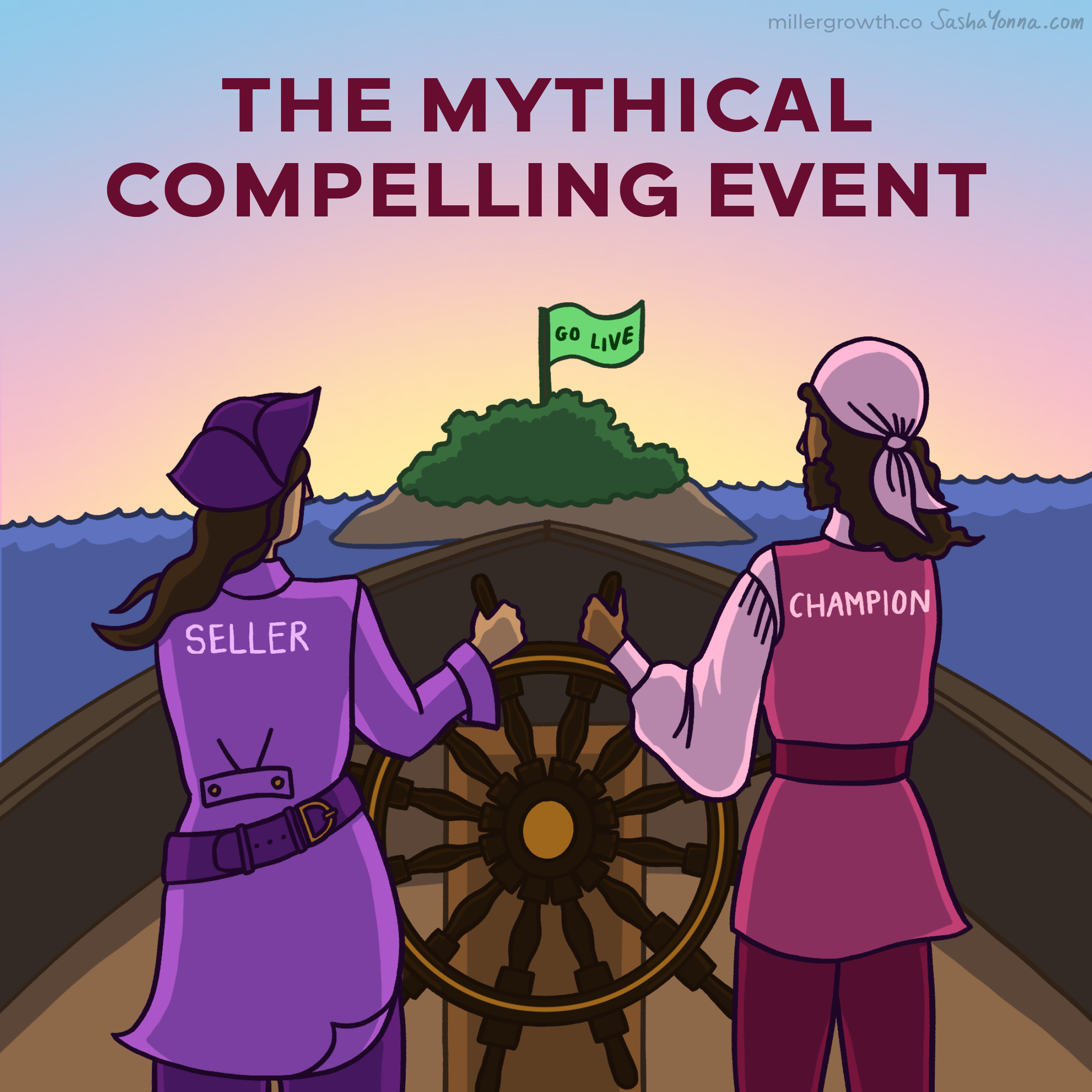
Most deals don't have a real compelling event forcing a decision - and no time-bound discount will invent one. What actually works is building the urgency yourself: make the cost of waiting felt by the people who'll feel it, and give the deal its own momentum with a shared go-live date.
Sales training talks about the compelling event constantly: the thing happening, on the date it's happening, that forces your prospect to act. Sometimes it's real. Their current supplier's contract comes up for renewal on a fixed date. Or maybe they've publicly committed to a launch that needs your technology to go live.
But most of the time, whether they move this month, next month, or in six months doesn't make any difference to them. The benefits will land sooner if they move sooner, but their business will keep ticking along without your solution for as many months as it takes. This is especially true when you're bringing something new to market - the client isn't arriving with a known problem, you're showing them there's a better way of doing things.
Discounts don't work
Don't offer time-bound discounts to force the decision. In my experience it rarely works: if they're not ready to decide this quarter, a 15% cut won't change that. Worse, once they are ready, they know the 15% is still available, whatever you tell them about the date.
Two things work here, especially run together:
Make them feel it
Classic sales training says to show the client how much they're losing every month without your solution - inefficiencies, missed revenue, increased risk. That's true, but the real work is tying it to the emotional frustration of the people involved, not just the numbers.
Make sure the CFO realises the reason the books never close on time is the lack of the tooling you provide. Make sure the manager running the project understands how many extra hours of engineering time she gets back. Have the junior staff tell their boss how excited they are to get this in place. Executives should leave knowing something is about to get better - not just leave with an abstract ROI.
Even in B2B or B2E, buying is emotional. Make them feel it.
Build a go-live plan
Create a shared document the prospect and you both use to track actions toward one goal - similar to a mutual action plan, but focussed differently. The MEDDPICC term is go-live plan for good reason: rather than focus on getting the contract signed - vendor value - you focus on getting the product live - customer value.
You need to agree that it would be ideal to have the solution running by, say, the end of next quarter. Map the steps between now and then, agree ownership and carefully track progress. That’s often enough to create real momentum inside the organisation toward that date, even with no compelling event forcing it. Tie it to the emotional frustration above, and keep the senior executives in sync whenever something slips.
By building this momentum, I've seen multiple deals move from vague discussions to active processes within the prospect, not always leading to a win, but leading to a decision in a sensible time frame.
There's rarely a real deadline. But you can build the momentum to drive decision-making.
I'm happy to look at a couple of deals where timing feels soft - just let me know.
If this was useful, stay close to the thinking.
Get practical GTM insights and strategic breakdowns in your inbox. Weekly.
Related Posts
Pipeline & Deal Velocity
2026-04-19
Selling when you're not in the room
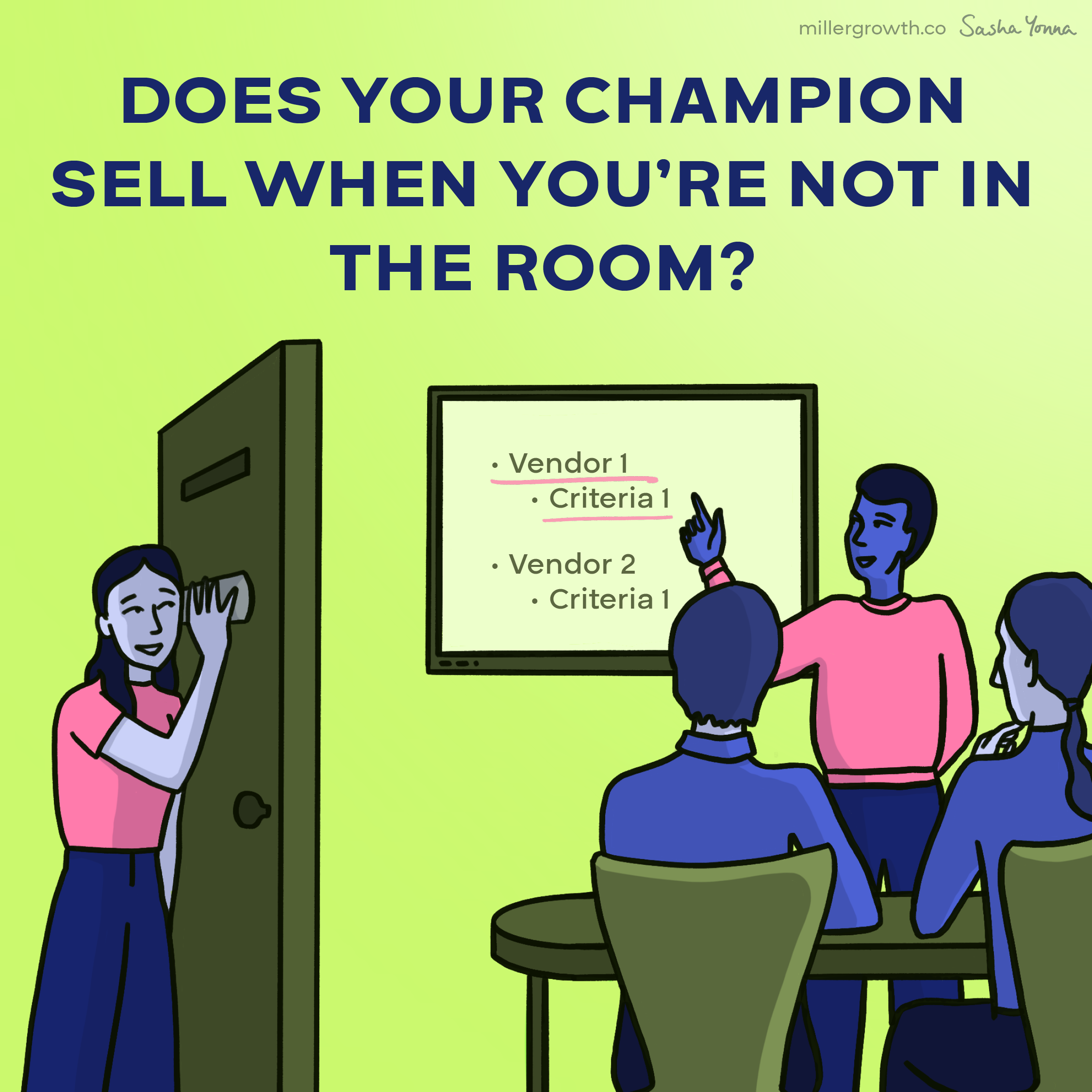
In a complex sale, most of the conversations happen without you in the room. What determines the outcome is whether each stakeholder can recall and repeat a simple, specific reason why you're the right choice - and whether you've shaped what that reason is.


Relevant resources
Tools and insights for improving your revenue engine
Demo Training
Coach winning demos

Discovery Training
Qualify deeper, faster
AE Toolkit
Hire top performers
See more resources →