How to run a great pipeline review

Pipeline & Deal Velocity
Who is it for?
For sales leaders and founders hiring or developing revenue talent.
When to use?
Use when interviews produce false positives and you need a repeatable way to assess real capability.
17 Sept 2024
Pipeline reviews often reinforce optimism. This article shows how to pressure-test assumptions.
Consider a company or team that has a small number of high-value deals. Maybe 10-15 that need to be reviewed each week. This should be comfortably covered in 1.5 hours, and as you get more experienced, just 1 hour. You may decide that you only need to do this every two weeks. Note that we not talking about full deal reviews (watch for another post), but regular updates. The goal of these updates is to ensure we are (1) taking the right steps to move the deals forwards, (2) giving leadership good understanding for forecasting purposes.
So let’s start with the big no-no. This should NOT be a general chat about the deals with the seller telling you about the last conversation they had, and then giving their level of confidence on the deal. At best this is a waste of time, worst it hides critical issues and provides misleading forecasts.
I strongly recommend a structured approach where you use MEDDICC questions based on the current stage of the deal.
* If it is early-stage (qualifying), we need to understand if they have a pain we can solve and a prospective Champion. We should discuss how to test that Champion and how to thoroughly understand that pain.
* Mid-stage (evaluating), we should have a well-tested Champion, clear idea of the Decision Criteria and good understanding the Decision Process. Our discussion should be around how we move these forwards their evaluation against those criteria.
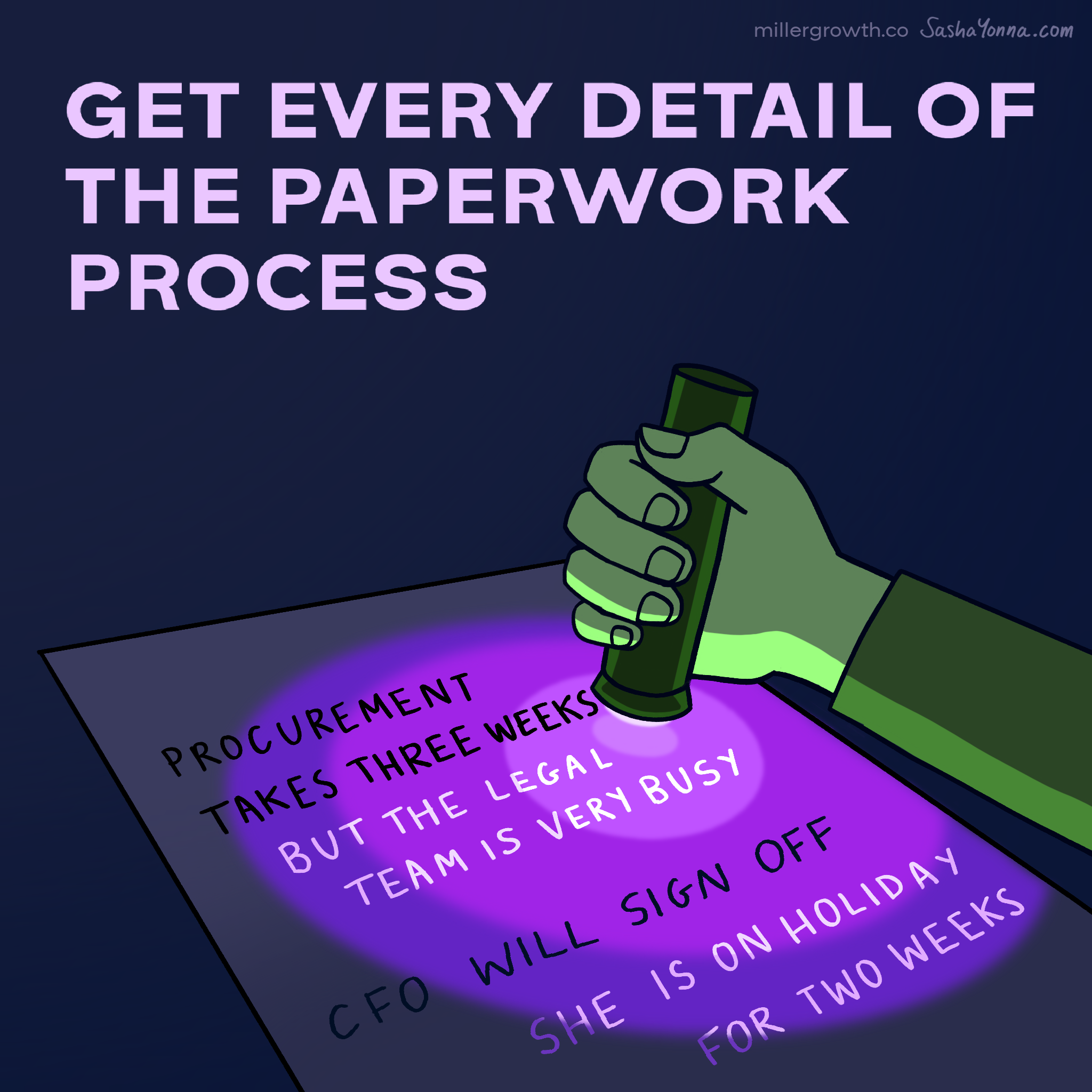
* If it is later stage (negotiation), we should have a detailed view of the Paperwork Process, and proper engagement with the Economic Buyer. If we don’t, then the Seller should take actions to make this happen.
Where the relevant information is missing, that is a red flag – is the deal in the correct stage? Is the Seller on top of it?
When the Seller answers these questions with good details, or confidently offers this status without questions, and can articulate the key steps to progress the deal, then you are having an effective pipeline review conversation.
Red flags suggest a deal is not happening this quarter. Amber flags mean work is to be done. If it is all green, against clearly articulated MEDDICC criteria, then it’s a strong opportunity (provided close dates are maintained accurately).
When you have much larger number of deals, then you need a lighter weight discussion and data delivered automatically. If you have many large deals – perhaps because you have a large team – then have separate pipeline reviews for different sectors/territories. If you are spending a lot of time on a single deal, pause and set up a separate deal review.
If this was useful, stay close to the thinking.
Get practical GTM insights and strategic breakdowns in your inbox. Weekly.
Related Posts


Pipeline & Deal Velocity
Relevant resources
Tools and insights for improving your revenue engine
Demo Training
Coach winning demos

Discovery Training
Qualify deeper, faster
AE Toolkit
Hire top performers
See more resources →